
Key Takeaways
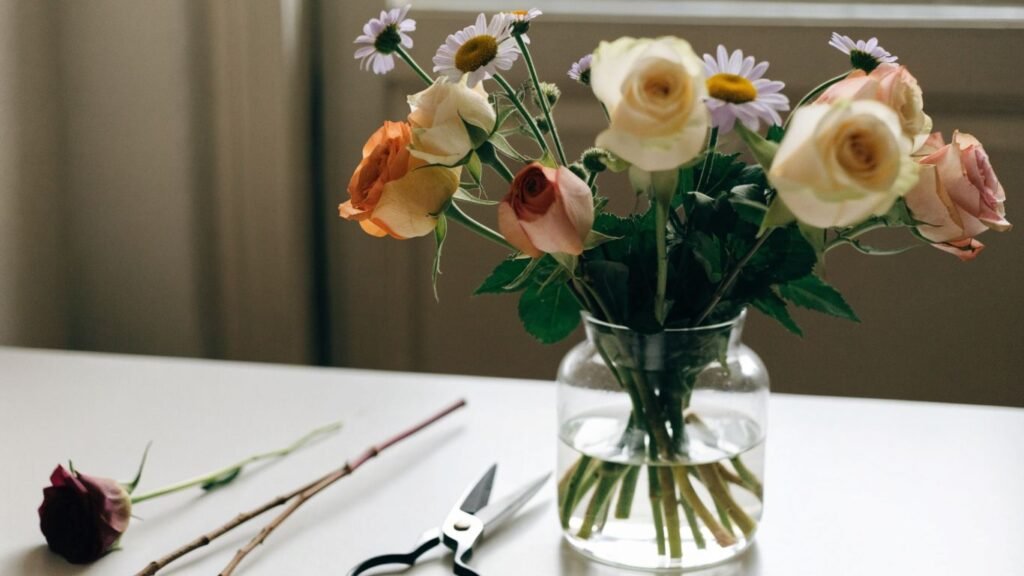
A few steady habits make more difference than elaborate tricks. Start with a clean vase, give stems room to drink, and keep an eye on the water and the room around them.
- Wash the vase and use clean tools before arranging.
- Remove submerged leaves and recut stems before they go into water.
- Mix flower food according to the packet rather than guessing.
- Keep the arrangement cool and away from fruit, drafts, and direct sun.
- Refresh the water and remove fading flowers as the days pass.
Prepare a clean vase and workspace
A little preparation makes flower care easier from the start. Set out a clean vase, sharp shears, and fresh water before unwrapping the bouquet, so cut stems do not sit out while you search for supplies. A calm, uncluttered setup also gives you room to sort the flowers and notice any damaged leaves or stems.
Choose a vase that gives stems room
Choose a vase that supports the arrangement without packing stems tightly together. A narrow neck can hold a loose bouquet in place, while a wider opening gives larger bunches more breathing room. The vase should be tall enough to support the stems, but its shape should still allow you to reach in and remove individual flowers later.
Wash away bacteria and residue
Rinse the vase, then wash its inside with dish soap and warm water, paying attention to any film around the bottom or rim. A clean container gives the fresh water a better start; old residue can make it cloudy sooner. Rinse thoroughly so no soap remains before you fill it.
Gather clean shears and fresh water
Use sharp, clean shears so the stems are cut cleanly rather than crushed. Have water ready at a comfortable room temperature unless the flower-food packet says otherwise. The setup-first approach has a distant cousin in a guide to Terraria farming, where preparing the work area also comes before the task itself; the flowers, of course, need no equipment beyond the basics.
Condition flowers before arranging
Once the vase is ready, prepare the stems before deciding exactly how the bouquet will sit. This gives the flowers a clean start in the water and makes it easier to arrange them without rushing. If you are bringing garden flowers indoors, advice on cutting and conditioning stems can help you think about timing as well as handling.
Remove leaves that would sit below the waterline
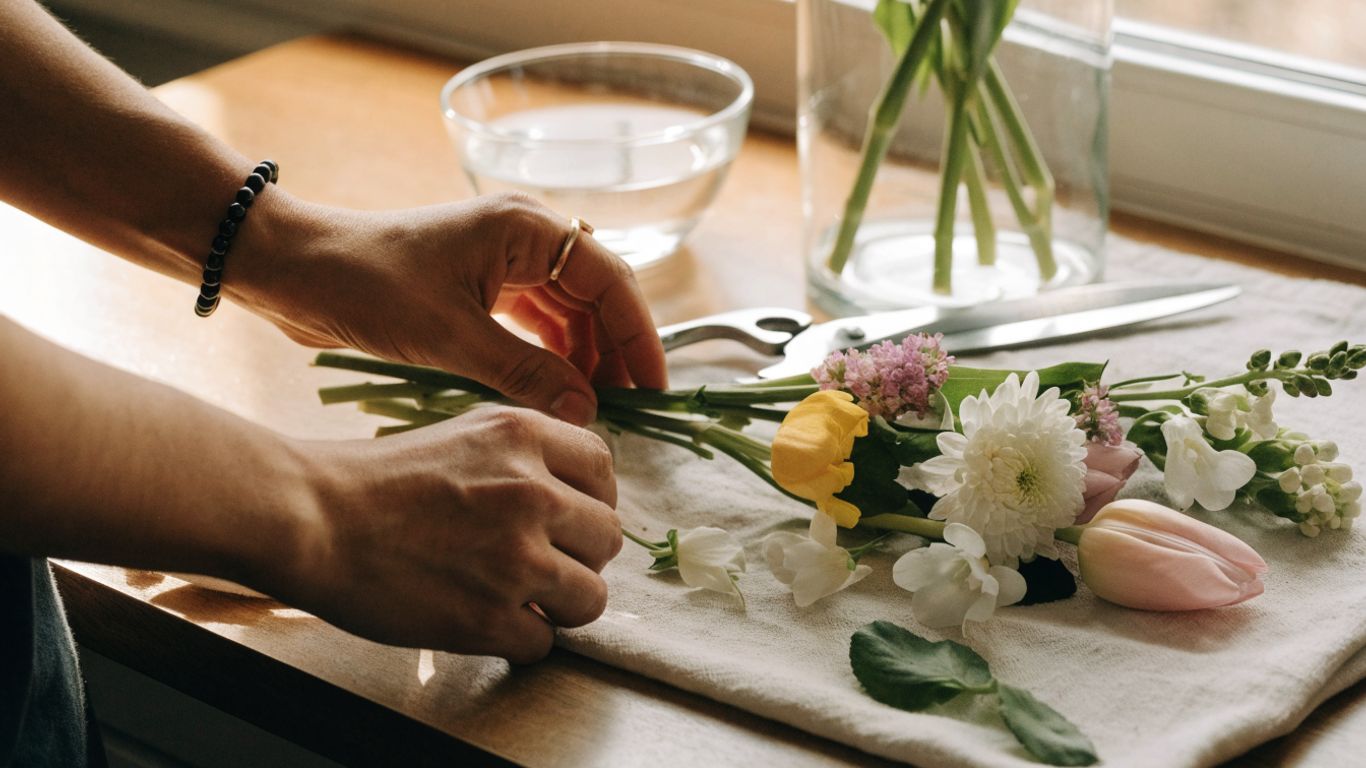
Strip away leaves that would be submerged once the flowers are in the vase. Wet foliage breaks down and can contribute to cloudy, unpleasant-smelling water. Keep healthy leaves above the waterline where they add texture, and remove only what needs to come off.
Trim stems at an angle
Trim a small amount from the bottom of each stem with sharp shears, making a slanted cut. This freshens the cut end before it goes into water and helps the bouquet sit at the height you want. If you are arranging several stems, trim them in manageable batches and place them in water as you work rather than leaving the whole bunch on the counter.
Let flowers hydrate before arranging
If the flowers look a little travel-weary, give them time in clean water before shaping the final arrangement. Keep the stems in a cool spot while they take up water, then adjust their positions once they look settled. For flowers worn as part of an event outfit, a separate guide explains hydrating wearable flowers; a vase bouquet has different needs, but both benefit from thoughtful handling.
Get the water and flower food right
Water is the everyday foundation of vase care, and flower food can help when it is provided with the bouquet. It is tempting to improvise, but a measured mix is simpler and more predictable than guessing at kitchen ingredients. The right choice depends on whether you have a packet and what its directions say.
Follow the flower-food packet instructions
Use the amount of water and flower food specified on the packet. Adding extra powder does not necessarily help, and too little water can leave the mixture more concentrated than intended. The label is the best guide; these common situations make the difference easier to see.
| Situation | Practical choice | Why it helps |
|---|---|---|
| A flower-food packet is included | Mix it as directed | Keeps the proportions consistent |
| The packet gives a water amount | Measure that amount | Avoids an overly concentrated mix |
| You are topping up the vase | Follow packet guidance | Maintains the intended balance |
| No flower food is available | Use clean water | Keeps care simple and manageable |
Once the food is mixed, pour it into the clean vase and arrange the stems. If you have only a little water left in the vase later, refreshing the whole mixture is usually more straightforward than trying to estimate how much powder to add.
Know when plain water is appropriate
If you do not have flower food, clean water is a sensible option. Replacing it regularly and keeping leaves out of it matter more than reaching for an untested substitute. A simple routine is easier to maintain, and consistency gives you a better chance of noticing when the bouquet needs attention.
Avoid common home-remedy myths
Household ingredients are often suggested as quick flower-care fixes, but combinations and amounts can be hard to judge. Rather than mixing sugar, vinegar, or other additions by eye, use the supplied flower food or plain water. A side-by-side flower-care test can offer another perspective on popular methods, but at home the packet directions remain the easiest place to start.
Choose the best spot for your arrangement
Where the vase sits can affect how quickly the flowers dry out or fade. Look for a place where you can enjoy the bouquet without exposing it to harsh sun, heat, or rapid changes in air temperature. A short check of the room each day helps you catch a spot that turns out to be less gentle than it first seemed.
Keep flowers away from direct sunlight and heat
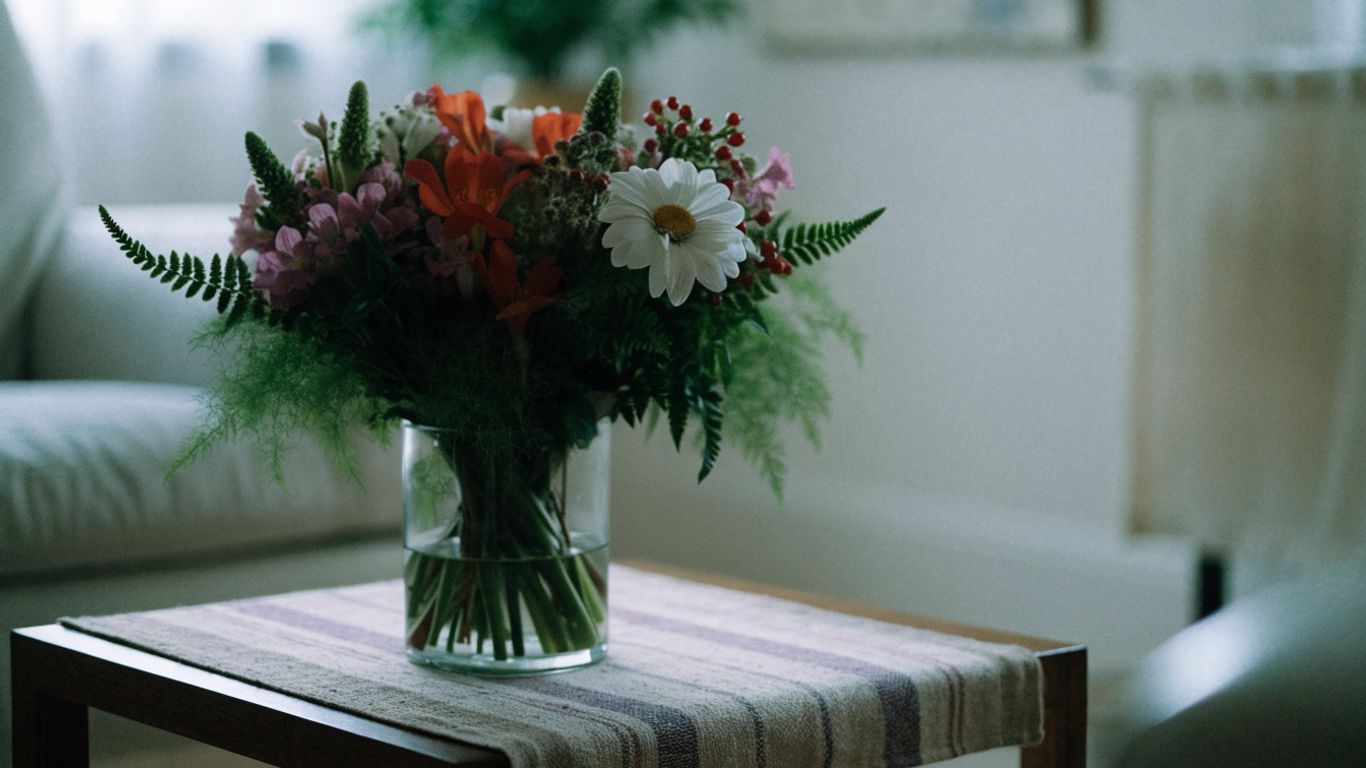
A bright window may seem like the natural place for a bouquet, but direct sun and nearby heat can make flowers lose moisture more quickly. Choose a cooler spot with indirect light instead. Keep the vase away from radiators, cooking areas, and other warm surfaces, especially during the hottest part of the day.
Avoid drafts, vents, and ripening fruit
Air blowing from a fan, heater, or air-conditioning vent can dry the petals and leaves. Ripening fruit also gives off ethylene, a gas that can speed the aging of some flowers, so give the vase a little distance from the fruit bowl. When choosing a spot, think about what happens there throughout the day, not just how it looks in the morning.
Adjust placement for different flower types
Mixed bouquets can include flowers that open and age at different rates, so avoid assuming every stem will look the same for the same length of time. A cooler, stable spot is a useful default, with enough room to separate a fading bloom if needed. The small choices that make a welcoming space feel cared for have their own counterpart in family activities in Las Vegas, though the best place for a bouquet is simply the one that suits its flowers.
Maintain the arrangement day by day
Fresh flowers ask for small, regular attention rather than a complicated schedule. Check the vase as you pass it, and respond when the water level drops or a stem starts to look tired. If you find a routine helpful, a guide to simple flower-care habits offers more ideas for keeping that attention manageable.
Change the water regularly
Replace the water when it looks cloudy, and do not wait for an odor to develop. A fresh fill gives you a chance to rinse away debris and check which stems are still drinking well. These brief steps make an easy routine, especially if you attach them to another daily habit:
- Empty the vase and discard the old water.
- Rinse the vase and remove loose bits of foliage.
- Refill with fresh water and flower food mixed as directed, if available.
- Return the flowers to the vase and check that no leaves are submerged.
The sequence takes only a few minutes, and keeping it consistent is more useful than trying to follow a complicated calendar. Notice how the stems look while you refresh the water; that quick check can tell you whether a trim or a small rearrangement is due.
Clean the vase and refresh the stem cuts
When you change the water, rinse the vase and wash away any film that has formed. If the lower ends of the stems look soft or discolored, trim a small amount off with clean shears before returning them to fresh water. A little care at the base of the arrangement can make the next few days easier to manage.
Remove fading blooms and foliage
Take out flowers that are clearly past their best, along with any fallen petals or leaves in the water. This keeps the arrangement neater and makes it easier to see which blooms are still opening. You can also shift the remaining stems into a smaller vase if the bouquet has thinned out; a simpler arrangement can still look lovely.
Troubleshoot common signs of wilting
A drooping stem does not always mean the whole bouquet is finished. Check the water, the cut ends, and the placement before deciding what to discard. Often, the first useful step is to correct the conditions that have changed rather than adding a new remedy.
Revive drooping stems with fresh water
Start by removing the flowers from cloudy water and checking the stem ends. Trim away a small section with clean shears, then place the stems in fresh water. Move the vase away from heat or a draft while the flowers rehydrate, and give them a little time before judging the result.
Address cloudy water and unpleasant odors
Cloudy water or an unpleasant smell is a cue to empty and clean the vase, not simply add more water on top. Remove loose foliage, rinse the container thoroughly, and refill it with fresh water and correctly mixed flower food if you have it. If a particular stem looks slimy or damaged, remove it before putting the rest of the bouquet back.
Recognize when a bloom has reached the end of its vase life
Some blooms will naturally fade while others in the same arrangement remain fresh. Petals that are limp, browned, or dropping heavily may not recover after a fresh cut and clean water. Remove those flowers and enjoy the blooms that remain; part of learning how to keep flowers fresh longer is knowing when a particular stem has had its moment.
Conclusion
A clean vase, freshly trimmed stems, suitable water, and a cool place give cut flowers a thoughtful start. Keep the routine simple: refresh the water, remove fading material, and make small adjustments as the bouquet changes. Flowers do not last forever, but a little steady care can help you enjoy them for longer.
Frequently Asked Questions
How often should I change the water in a vase?
Change it whenever it becomes cloudy, and check it daily so you can top up or refresh it before the level gets low. Rinsing the vase when you replace the water helps remove residue.
Should I use cold or warm water for cut flowers?
For most home arrangements, clean water at a comfortable room temperature is a practical choice. Follow any specific directions supplied with the flowers or flower food.
Do I need to cut flower stems again after arranging them?
You can trim the stem ends when the water is changed, especially if they look soft or discolored. Use clean, sharp shears and remove only a small amount.
Can I keep flowers in direct sunlight?
It is usually better to place cut flowers in indirect light, away from direct sun and heat. A cooler, stable spot can help prevent them from drying out quickly.
Why is the water in my vase cloudy?
Cloudiness can develop as plant material and residue collect in the water. Empty the vase, rinse it, remove submerged leaves, and refill it with fresh water.
Does flower food really help cut flowers last longer?
Flower food is designed for use with cut flowers, but it should be mixed according to the packet directions. If you do not have any, clean water and regular care are sensible alternatives.
Should I remove wilted flowers from a mixed bouquet?
Yes. Removing blooms that are clearly fading, along with loose petals and leaves, keeps the arrangement tidy and makes it easier to care for the flowers that remain.