Key Takeaways
Flowers cannot remove grief, but they can offer a gentle, visible sign of care. The most thoughtful choice considers the family, the service, and the person being remembered.
- Choose an arrangement that suits its destination, whether that is a family home, funeral service, or memorial gathering.
- Let the family’s preferences, cultural customs, and the personality of the deceased guide your decisions.
- Confirm the delivery address, service time, and florist requirements before placing an order.
- A sincere card can matter more than the size or price of the arrangement.
- Plan for simple care after delivery so the flowers remain fresh and useful for as long as possible.
Understanding the role of flowers in grief
Flowers for grief Altona families receive can provide comfort when conversation feels difficult. They do not take away the pain of loss, but they can make a quiet gesture tangible. A carefully chosen tribute acknowledges both the person who has died and the people left behind. The meaning usually comes from the thought behind it, not from spending a particular amount.
How flowers express sympathy and support
A floral arrangement can communicate presence when you are unsure what to say. Its color, shape, and scale may recall the person’s character, while its simple beauty brings warmth to a room or service. Even a modest bouquet can feel deeply considerate when it is accompanied by a personal message.
The sympathy flower guide for Altona offers another way to think through the setting, timing, and family preferences before choosing a tribute. Those details often matter more than following a rigid tradition.
When sympathy flowers are appropriate
Flowers may be sent soon after a death, during the first days of mourning, or around a funeral or memorial service. A home arrangement can be especially suitable when you want to support relatives privately, while service flowers are intended for a shared ceremonial space. If the family has requested donations instead of flowers, that wish should take priority.
When timing is uncertain, ask a close relative, funeral home, or service coordinator what would be most helpful. A gesture sent later can still be meaningful; grief does not follow a strict schedule.
The difference between funeral, memorial, and condolence arrangements
Funeral arrangements are usually designed for the service and may be delivered to a funeral home, place of worship, or cemetery. Memorial flowers may be chosen for a gathering held later and can be more personal in style. Condolence flowers are generally sent to the family’s home as a private expression of support.
Knowing the destination helps determine the arrangement’s size and structure. A large display may suit a service but overwhelm a small home, while a compact bouquet may be ideal for a bedside table or living room.
Choosing the right flowers for a grieving family
There is no single correct flower for every bereaved family. White and neutral arrangements are often selected for their calm appearance, but softer pastels or a favorite color may feel more personal. The relationship you had with the deceased, the family’s preferences, and the location of the tribute all deserve consideration.
Traditional flowers and their meanings
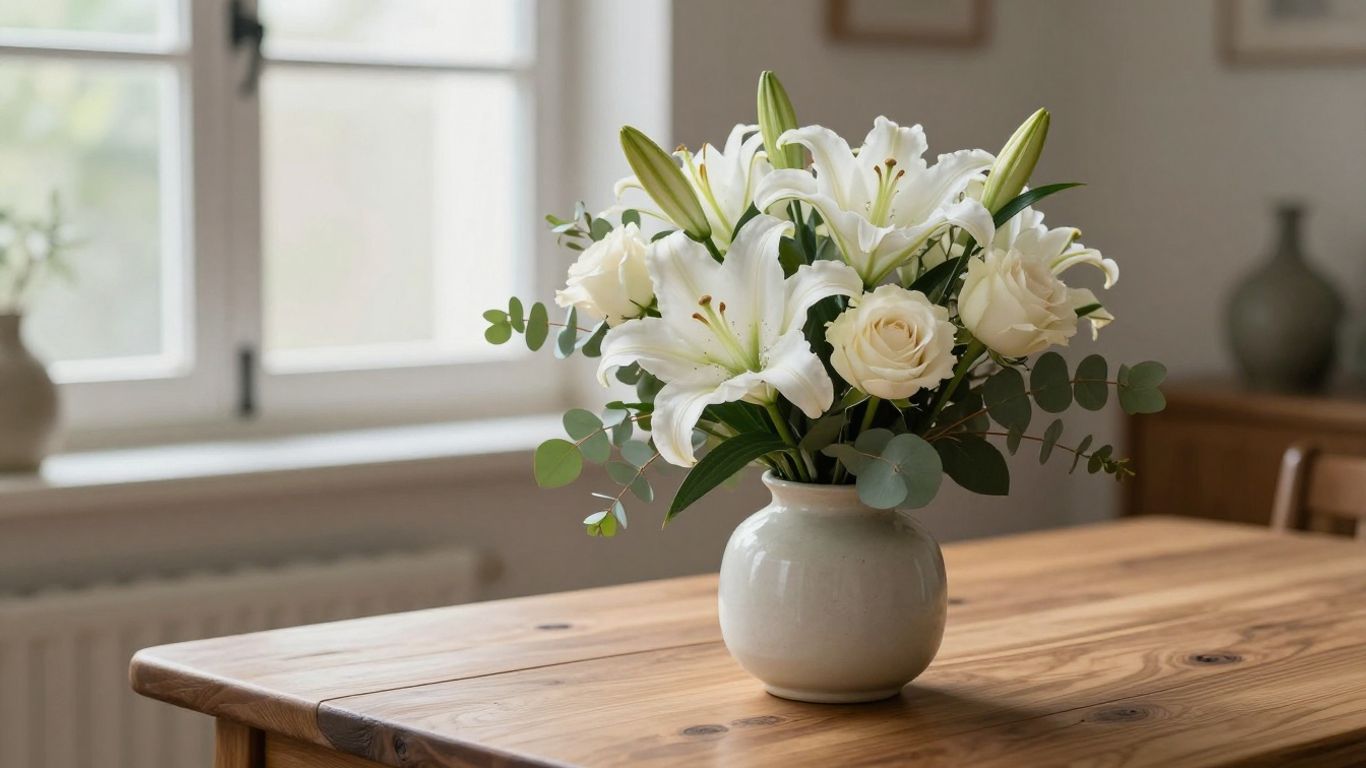
Lilies are often associated with peace and remembrance, while roses can express love and respect. Daisies may suggest peace and hope, and gladiolus are sometimes connected with strength and integrity. These meanings can be useful starting points, but they are not rules; a favorite flower may carry more significance than a traditional symbol.
For a broader look at floral symbolism, this guide to funeral flower meanings discusses lilies, daisies, snapdragons, gladiolus, tulips, and lavender. Use symbolism as a prompt for reflection rather than a substitute for knowing the family.
Appropriate colours for sympathy arrangements
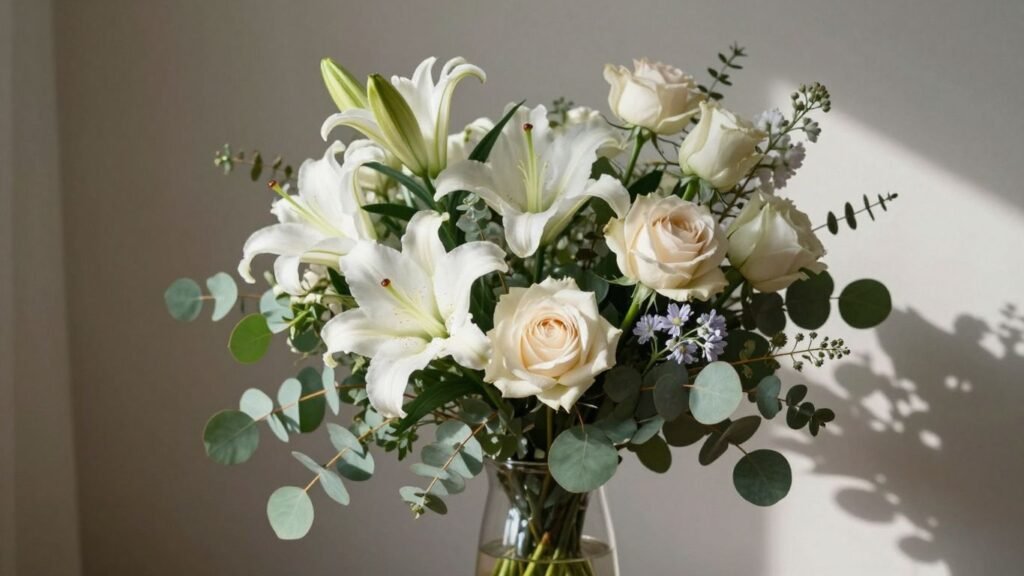
White, cream, and pale green can create a quiet, understated arrangement. Soft pinks, lavender, and gentle blues may also feel appropriate when they reflect the deceased’s personality or the family’s taste. Brighter colors are not automatically unsuitable, particularly when they recall someone known for a lively spirit.
The best palette is one that feels sincere in its setting. A personal color choice can make a tribute warmer without making it less respectful.
When to choose a wreath, bouquet, or standing spray
A wreath is a lasting circular tribute that can be displayed at a service or graveside. Bouquets are flexible and work well for a family home, a memorial table, or a smaller gathering. Standing sprays are more formal and visible, making them suitable when several people will view the arrangement during a service.
Before choosing, consider the available space and whether the flowers will be moved after the ceremony. The range of funeral flower arrangements can help clarify how different formats suit homes and service venues.
Selecting flowers based on the family’s preferences
Think about the person’s favorite blooms, garden, colors, or connection to the natural world. Australian natives may be a thoughtful choice for someone who loved local landscapes, while a simple seasonal bouquet may better suit a family that prefers restraint. If you do not know their taste, ask someone close to them or choose a classic arrangement with a personal card.
Wildberry Flowers creates sympathy arrangements in calming whites and neutrals, elegant lilies, Australian natives, softer pastels, and other colors that can reflect the person remembered. That documented range can be useful when you want a choice that feels both sensitive and personal.
Personalising flowers for grief in Altona
Personalisation does not require an elaborate design. A favorite flower, familiar color, or few carefully chosen words can make an arrangement feel connected to a real life rather than selected from a distance. Keep the family’s comfort at the center and avoid adding details that might create extra work for them.
Adding meaningful flowers or keepsakes
You might include a favorite bloom, a small photograph, or a keepsake only when the florist and family can accommodate it safely. Some families appreciate a ribbon in a familiar color or flowers that recall a garden the person cared for. Others prefer a clean, traditional design.
Ask before sending anything fragile, valuable, or difficult to store. The most meaningful addition is usually one that can be enjoyed without creating another decision.
Including a thoughtful sympathy card
A card gives the flowers a voice. Keep the message simple, warm, and specific: mention a memory, express your care, or let the family know you are thinking of them. You do not need to explain the loss or offer a solution.
A few sincere lines are enough. Writing the person’s name and signing your own name clearly can make the gesture feel more personal, especially when many arrangements arrive together.
Considering cultural and religious traditions
Customs surrounding flowers, colors, timing, and funeral services vary widely. Some families may welcome flowers, while others may prefer donations, particular colors, or no floral tribute at all. Religious or cultural expectations may also affect whether flowers are sent to a home, service, or cemetery.
If you are unsure, consult a family member or service coordinator. The Altona funeral flower selection guide also highlights the value of matching the tribute to the service and respecting cultural preferences.
Respecting the wishes of the bereaved family
A family’s request should guide every choice, including the decision not to send flowers. If they have named a charity, follow that direction rather than adding a floral arrangement. If they have asked for a particular style or color, pass that information to the florist accurately.
Care is sometimes expressed through restraint. A short message, a practical offer of help, or a respectful presence can be more appropriate than a large display.
Ordering sympathy flowers in Altona
Ordering flowers during a loss can feel like one more practical task at an already difficult time. A few details make the process easier: identify the recipient, decide where the flowers should go, and confirm when they need to arrive. Local knowledge can be helpful when a service venue has particular delivery procedures.
Choosing a local florist
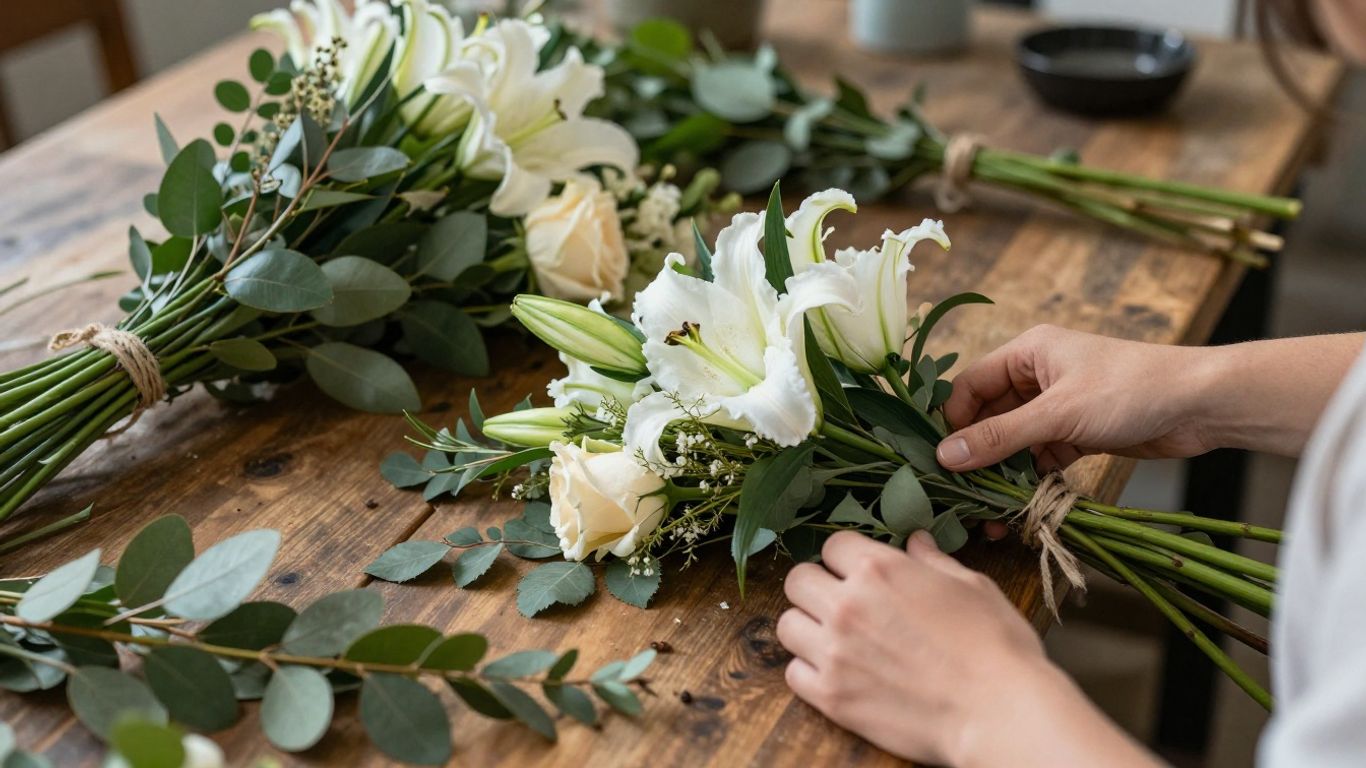
A local florist may understand nearby funeral homes, service venues, delivery routes, and seasonal flower availability. Look for clear arrangement descriptions, a reliable contact method, and a willingness to discuss the family’s needs. It is reasonable to ask what style is suitable for the destination before ordering.
Wildberry Flowers offers sympathy arrangements suitable for family homes and funeral flowers, with styles including calming whites, neutrals, lilies, Australian natives, softer pastels, and personality-led colors. Keep the request specific, but allow the florist some flexibility when seasonal substitutions are necessary.
Checking delivery options and timing
Confirm whether the flowers are going to a home, funeral home, place of worship, cemetery, or another venue. Ask about delivery windows, cut-off times, weekend service, and whether someone will be available to receive a home delivery. Funeral venues may have their own receiving hours.
Treat the details as carefully as you would a mortgage renewal plan: check the dates, names, and destination before committing. A small error in the address or service time can cause unnecessary stress.
Providing accurate funeral or memorial details
Give the florist the deceased’s full name, the recipient’s name, the complete delivery address, and the service date and time. Include the venue’s name and any room, chapel, or funeral director information you have. If the flowers are for a home, add a phone number and clear delivery instructions when appropriate.
Read the confirmation carefully. If the service has moved or the family’s wishes have changed, contact the florist promptly rather than assuming the original order can be redirected.
Arranging same-day delivery when needed
Same-day delivery may be possible, but it depends on the florist’s current capacity, the order time, the destination, and flower availability. Call first when the timing is urgent and explain the exact deadline. A florist may recommend a design that can be prepared promptly without compromising its appropriateness.
For additional practical context, same-day sympathy flowers may be available in a range of sensitive styles through Wildberry Flowers. Confirm the service details before paying, particularly when delivery must reach a venue within a narrow window.
The logistics of a delivery can resemble coastal excavation planning: sequence and site details matter. That comparison is only about planning carefully; funeral deliveries should always be handled with sensitivity and direct confirmation.
Planning a sympathy flower budget
A sympathy gesture does not need to be expensive to be heartfelt. Price usually changes with the arrangement’s size, flower variety, design complexity, and delivery requirements. Decide what feels comfortable before browsing, then choose the form that best suits the family and setting.
Comparing arrangement styles and sizes
A small bouquet may be appropriate for a home, while a medium arrangement can provide a fuller display at a memorial gathering. Wreaths and standing sprays generally occupy more visual space and may be chosen when several mourners will see the tribute. Ask whether the flowers will be displayed alone or alongside arrangements from other people.
Compare like with like: size, flower types, container, card, delivery, and any requested custom work. This gives you a clearer sense of value than judging a photograph alone.
Understanding delivery and service fees
The displayed flower price may not include delivery, a service fee, a container, or a rush charge. Ask for the complete total before confirming the order. Same-day or long-distance delivery can cost more, particularly when the destination has restricted access.
If you are ordering online, review the payment and cancellation terms. For a general example of why terms deserve attention, you can read Hamset Anaqa’s usage policy, although its policies apply to that separate store and not to a sympathy flower order.
Choosing meaningful options at different price points
At a lower price point, choose a seasonal bouquet with a personal card. A mid-range arrangement might add a favorite flower, a more distinctive palette, or a fuller design. A larger tribute can be suitable for a service when several relatives are contributing together.
Meaning comes from fit, not scale. A modest arrangement in the right color or with a remembered flower can feel more considered than an expensive design chosen without personal context.
Coordinating flowers with other family members
Family members sometimes order separately and unintentionally send several similar arrangements. One person can contact close relatives, confirm what is needed, and coordinate a shared tribute. This may also make it possible to choose a larger arrangement while keeping each person’s contribution manageable.
Agree on the destination, message, budget, and delivery time. A single well-planned tribute can reduce duplication and make the family’s practical arrangements easier.
Caring for sympathy flowers after delivery
Once flowers arrive, small actions can keep them looking fresh and reduce the work of caring for them. The right approach depends on whether the arrangement is a cut bouquet, a vase design, floral foam, or a standing display. If the family is overwhelmed, a friend can quietly take responsibility for basic care.
Keeping bouquets and arrangements fresh
Place cut flowers in a clean container with fresh water, away from direct sun, heaters, air-conditioning vents, and ripening fruit. Trim stems at an angle if the design allows it, and remove leaves that sit below the waterline. Check the water regularly and follow any care instructions supplied with the arrangement.
Arrangements in floral foam should be topped up gently rather than dismantled. If flowers begin to fade, remove them so the remaining blooms look cared for.
Placing flowers at home or at a service
At home, choose a stable surface where the arrangement can be seen but will not be knocked over. Keep it away from children, pets, and narrow walkways. At a service, follow the venue’s instructions about placement, access, and collection after the ceremony.
A simple location is often best. The flowers should offer comfort without obstructing photographs, seating, or the movement of mourners.
Preserving meaningful blooms
Some flowers can be pressed between absorbent paper or dried in a cool, dry place. Choose blooms that are still in good condition and handle them gently. Ask the family first, since preservation may be emotionally significant but can also feel like an unwanted responsibility.
A single dried flower, photograph, or handwritten card may be easier to keep than an entire arrangement. Store preserved pieces away from strong sunlight and moisture.
Donating or responsibly disposing of flowers afterward
When an arrangement has faded, separate flowers, containers, ribbons, and floral foam where local disposal rules allow. Reusable vases can be washed and kept or returned to the florist if that service is available. Some community spaces, hospitals, or care homes may accept suitable flowers, but ask first rather than assuming.
There is no need to feel guilty when flowers reach the end of their life. Their purpose was to offer care during a particular time, and respectful disposal is a natural part of that process.
Conclusion
Choosing sympathy flowers in Altona is less about finding a perfect arrangement than making a considerate decision for a particular family and moment. Think about the destination, the person remembered, the family’s wishes, and the practical timing. A sincere card and a thoughtful flower choice can quietly say that the bereaved are not alone.
Frequently Asked Questions
What flowers are most appropriate for grief?
Lilies, roses, daisies, gladiolus, tulips, and lavender are common choices, but a favorite flower or seasonal bloom may be more personal. The family’s preferences should guide the final decision.
Should sympathy flowers be sent to the home or funeral service?
Send flowers to the home when you want to offer private support to relatives. Send them to the service when they are intended as part of a shared tribute, and confirm the venue’s delivery rules first.
Are bright colors suitable for sympathy flowers?
Yes, when they reflect the personality of the deceased or the family’s preferences. White and neutral tones are traditional, but softer pastels and meaningful brighter colors can also be respectful.
What should I write in a sympathy card?
Keep the message brief and sincere. Express your care, mention a kind memory if appropriate, and let the family know you are thinking of them without trying to explain or solve their grief.
Can I order sympathy flowers for same-day delivery?
Sometimes. Availability depends on the florist’s capacity, order time, destination, flower supply, and delivery requirements. Call as early as possible and confirm the deadline before ordering.
How much should I spend on sympathy flowers?
Spend an amount that feels comfortable rather than treating price as a measure of love. A modest, well-chosen bouquet with a personal message can be deeply meaningful.
What should I do when the family requests donations instead of flowers?
Respect the request and make the donation if you are able. You can still send a card or offer practical support, provided that doing so aligns with the family’s wishes.
Pingback: What flowers for sympathy Altona families can send: A thoughtful guide