Key Takeaways
A get-well bouquet should feel personal, practical, and considerate of the recipient’s surroundings. A little planning helps the flowers arrive at the right place and remain enjoyable during recovery.
- Choose colors and flowers that suit the recipient’s personality.
- Check allergies, sensitivities, and facility delivery rules first.
- Add a sincere card message rather than relying on the bouquet alone.
- Confirm timing, address details, and delivery instructions before ordering.
- Include simple care guidance so the arrangement lasts longer.
Understand what makes a thoughtful get-well bouquet
The best get-well flowers are chosen with the person, not just the occasion, in mind. Think about their home, hospital room, or care-facility space, along with how much energy they have for maintenance. A manageable arrangement with a warm message can be more comforting than an elaborate display. When considering get well soon flowers Altona recipients will love, let their everyday preferences guide the decision.
Match the flowers to the recipient’s personality
Start with what the recipient already enjoys. Someone who loves gardening may appreciate a cheerful mix of familiar blooms, while a minimalist may prefer a small, carefully arranged bouquet in a simple vase. If you are unsure, choose a balanced design with varied textures rather than something strongly themed.
A thoughtful arrangement does not have to be large. The gesture feels more personal when it reflects a favorite color, a fond memory, or the recipient’s usual style.
Choose colors that create a cheerful mood
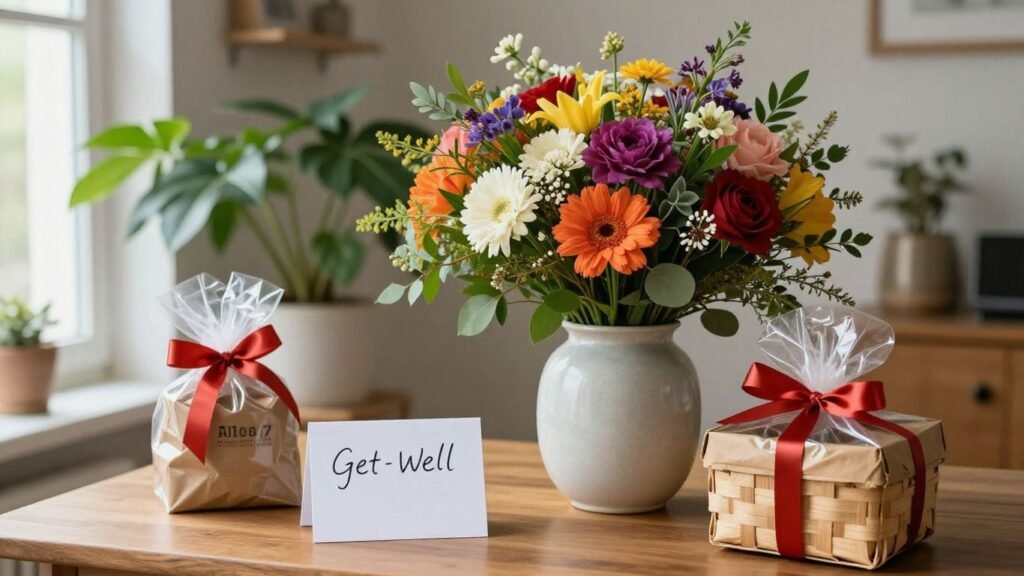
Color can gently influence the atmosphere of a room. Yellow, coral, orange, and bright pink flowers often bring energy, while white, cream, lavender, and pale blue can create a quieter feeling. Consider combining one lively shade with softer supporting colors so the result feels uplifting without becoming overwhelming.
You might also look at the room itself. A bright bouquet can enliven a neutral space, whereas a softer palette may sit more comfortably beside patterned furnishings or limited bedside space.
Consider allergies, sensitivities, and hospital policies
Before ordering, ask whether the recipient has flower or fragrance sensitivities. Strongly scented blooms may not be suitable in a shared room, and some hospitals or care facilities restrict fresh flowers, glass containers, or arrangements that shed pollen. A quick call to reception or the nursing station can prevent an uncomfortable surprise.
If flowers are not permitted, a low-fragrance plant, a gift basket, or a non-floral item may still convey the same care. The recipient’s comfort should take priority over tradition.
Decide between flowers, plants, and gift arrangements
Cut flowers offer immediate color, while a plant can provide a longer-lasting reminder of your support. Gift arrangements may be useful when the recipient needs snacks, reading material, or small comforts more than another vase. For hospital deliveries, compact designs are usually easier to place and move.
For a wider recovery gift, you could pair the bouquet with a suitable care package. A get-well gift selection can help when flowers need to be combined with practical items, though you should still verify the facility’s receiving rules.
Select the right flowers for the occasion
The stage of recovery can help determine the style and scale of the arrangement. A lively bouquet may suit someone returning home, while a calmer, long-lasting design may be better for an extended stay. Seasonality also affects color, availability, and value. Choose the feeling you want to convey first, then let the florist suggest suitable stems.
Bright blooms for encouragement and optimism
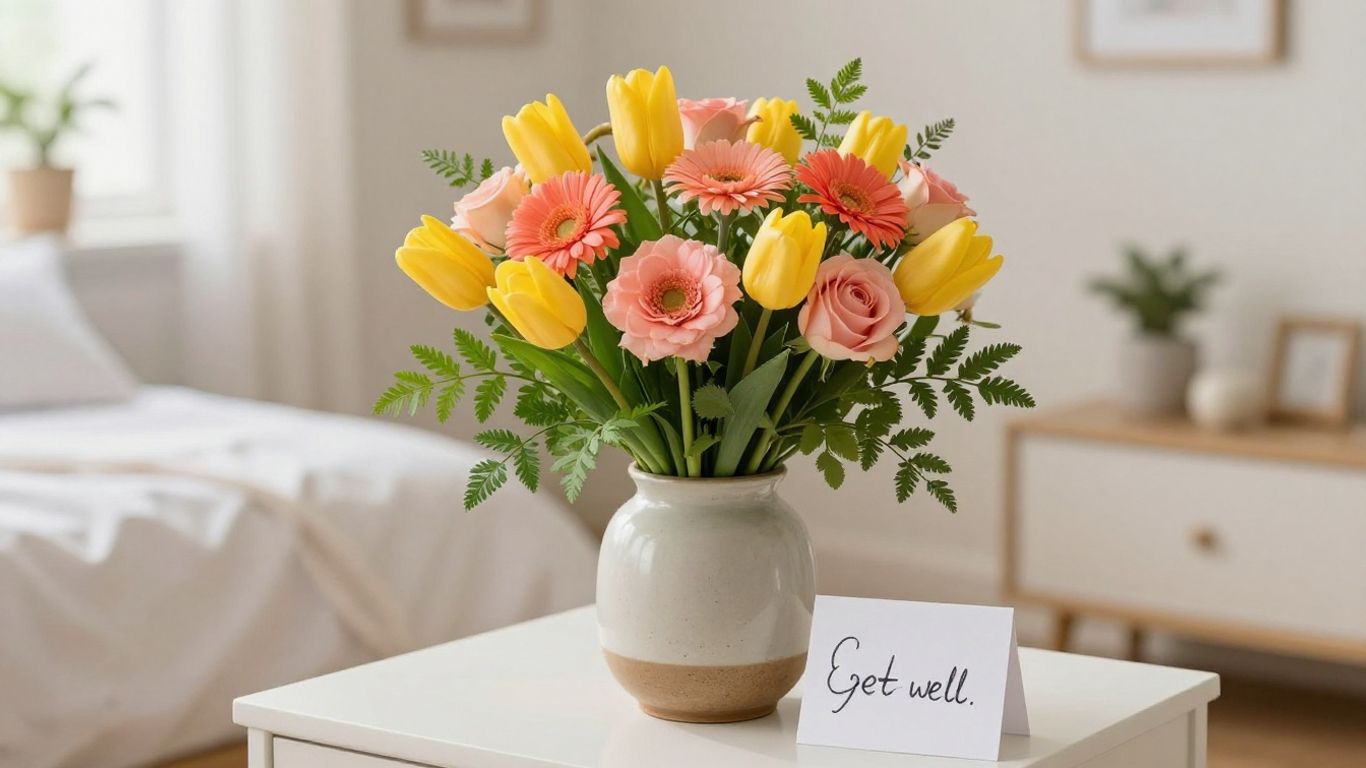
Sunflowers, gerberas, tulips, and brightly colored mixed blooms can create a welcoming focal point. They work especially well when you want to say that you are thinking of the recipient and looking forward to seeing them active again. Keep the arrangement proportionate to the room so its brightness feels pleasant rather than intrusive.
A local florist may be able to suggest a seasonal mix that has a naturally fresh appearance. For ideas, browse fresh Altona flower delivery and compare the color combinations used in current arrangements.
Soft arrangements for rest and recovery
Pastel roses, lisianthus, chrysanthemums, and delicate mixed flowers can make a room feel gentler. These arrangements suit recipients who are tired, sensitive to fragrance, or likely to spend long periods resting. Ask for restrained greenery and a compact vase if bedside space is limited.
Soft does not have to mean dull. A small accent of peach, lilac, or fresh green can keep the arrangement warm and hopeful while preserving a restful mood.
Long-lasting flowers for an extended stay
For a longer recovery, select sturdy flowers and an arrangement that can be refreshed easily. Chrysanthemums, carnations, alstroemeria, and some orchids can offer lasting color when they receive appropriate care. A florist can advise which stems are freshest and best suited to the expected setting.
Plants are another option when the recipient has a suitable home environment and the energy to care for one. A handcrafted flower arrangement may be preferable where immediate color matters, while a plant can continue to offer interest after cut flowers fade.
Seasonal options available in Altona
Seasonal flowers often look natural in a local bouquet and may provide better value than forcing a particular variety. Ask what is freshest on the day, then describe the mood, preferred colors, and approximate size you want. This gives the florist room to create an attractive arrangement from available stems.
The same approach works for custom designs. If you are ordering around a holiday or important date, allowing substitutions can make delivery more reliable without losing the character of your gift.
Personalize your get-well flower delivery
Flowers make the room brighter, but the personal details make the gift memorable. Consider what you know about the recipient, how close you are, and whether they are facing a short illness or a lengthy recovery. A few carefully chosen words can make a standard arrangement feel unmistakably meant for them. Keep the tone warm, honest, and easy to read.
Add a sincere message to the card
Write as though you were speaking to the recipient in person. Mention that you are thinking of them, offer practical help if you can, and avoid making promises you cannot keep. A short note such as “Thinking of you—call whenever you feel up to it” can feel more genuine than a grand statement.
If several people are contributing, include their names clearly. The card should be large enough to read without effort and placed where the recipient can see it easily.
Include suitable gifts such as chocolates or balloons
Small extras can complement flowers, provided they suit the person and the setting. Chocolates, fruit, tea, a soft toy, magazines, or balloons may be welcome, but dietary restrictions and facility rules matter. Avoid sending food when you do not know whether the recipient can eat it.
A local arrangement page such as custom Altona bouquets may offer useful inspiration for pairing flowers with a modest extra. Keep the total gift easy to carry and store.
Choose an arrangement that reflects your relationship
A close friend might appreciate an inside reference, favorite flower, or playful color combination. For a colleague, neighbor, or distant relative, choose something warm but broadly appropriate. Romantic flowers can be lovely, but they may send the wrong message in a professional or family context.
The scale can communicate something too. A small posy feels discreet and thoughtful; a fuller bouquet can suit a household gathering or a return-home celebration.
Avoid messages that may feel overly cheerful or dismissive
Recovery is not always quick, and forced optimism can leave someone feeling unseen. Avoid phrases that minimize pain, compare their illness with someone else’s, or suggest they should be positive. Instead, acknowledge the difficulty and offer steady support.
A useful card might say, “I’m sorry this has been such a hard week. I’m here for you and sending love.” That kind of message leaves room for the recipient to feel exactly as they do.
Plan get-well flower delivery in Altona
Delivery details deserve as much attention as flower selection. A beautiful arrangement is less useful if it arrives after visiting hours, goes to the wrong entrance, or cannot be accepted by the facility. Confirm the location and timing before paying. If you are comparing services, same-day Altona delivery can be a helpful starting point, but always check the current cut-off and destination rules.
Compare same-day and scheduled delivery
Same-day delivery suits a sudden illness or a last-minute gesture, while scheduled delivery gives you more control around a birthday, procedure, or return home. Ask when the order must be placed and whether the service promises a delivery window or only a delivery date. Earlier ordering generally gives the florist more choice of stems.
A scheduled order can also be easier for workplaces and care facilities, where deliveries may only be accepted during set hours.
Confirm the recipient’s address and delivery instructions
Use the recipient’s full name, street address, unit or room number, and a reliable contact number where possible. For a hospital, include the facility name, ward details if known, and any loading-dock or reception instructions. Do not assume the billing address is the delivery address.
Before submitting an order, check these practical details:
- Spell the recipient’s name exactly as the facility records it.
- Add the room, unit, or apartment number when available.
- Include a phone number for delivery questions.
- Note gates, concierge desks, reception hours, or safe-drop limits.
These small checks reduce delays and make it easier for the courier to locate the right person. If the recipient may be transferred or discharged, ask the facility how gifts are redirected or collected.
Check delivery availability to homes, hospitals, and care facilities
Homes are usually the simplest destination, but apartments, hospitals, and care facilities may have separate procedures. Some accept flowers only at reception, while others may not accept glass, plants, or scented arrangements. Confirm whether the florist delivers directly to the room or leaves the gift with a central desk.
If the recipient is in another town or state, location matters even more. A listing for Altona, Illinois flower delivery illustrates why you should confirm the intended Altona before placing an order; similarly named communities can have entirely different delivery areas.
Order early for important dates and time-sensitive deliveries
Order ahead for public holidays, weekends, and dates connected to surgery or discharge. Fresh seasonal stems can sell quickly, and a florist may need time to source a particular color or container. If timing is critical, call after ordering to confirm the details rather than assuming an email receipt guarantees arrival.
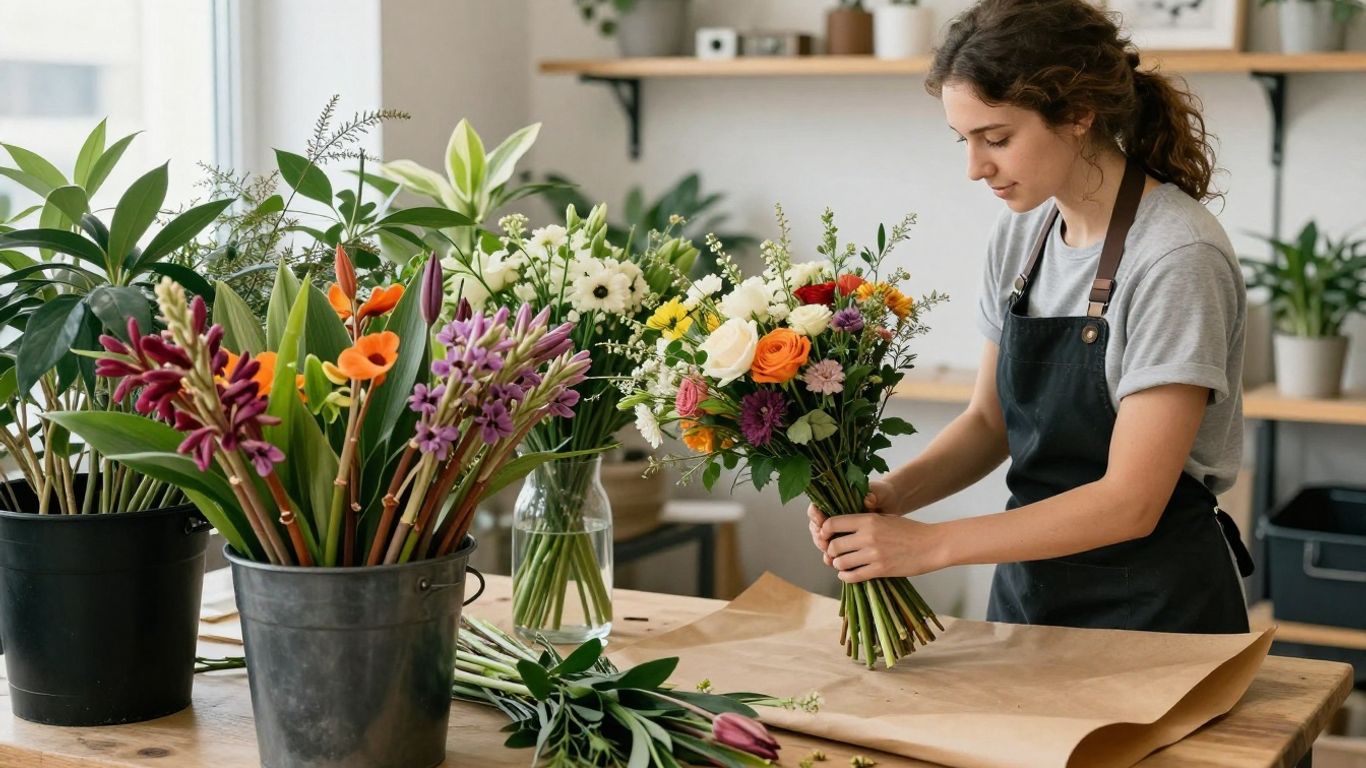
A delivery request is strongest when it includes a realistic fallback, such as leaving the bouquet with reception or delivering it to the recipient’s home if plans change. Get written confirmation of any special instruction.
Choose a florist and arrangement that fit your budget
Price is only one part of the decision. The displayed bouquet may not include delivery, a vase, a card, or seasonal substitutions, so review the complete cost before ordering. A smaller arrangement made with fresh, well-conditioned flowers can look better than a larger but tired bouquet. Aim for a gift that feels generous without creating unnecessary expense.
Compare bouquet sizes and flower varieties
Look at the approximate dimensions, flower types, and container included in each option. A compact bouquet may be ideal for a bedside table, while a larger design could suit a dining room or entryway at home. If the recipient has limited space, prioritize shape and freshness over volume.
You can also ask whether the florist can keep the same color palette at a lower price by changing the flower variety. Flexibility often produces better value than insisting on one specific bloom.
Review delivery fees and service areas
Delivery charges can vary by suburb, distance, timing, and destination type. Check whether hospital or care-facility delivery costs more and whether a weekend or same-day surcharge applies. A low bouquet price may not remain low after these additions.
For a broader comparison of service choices, a local florist delivery option can help you see how custom work and delivery timing are presented. Treat the listed details as a prompt to verify the current terms directly.
Look for fresh-flower guarantees and replacement policies
Read the policy before ordering, especially if the bouquet is going to a facility where access may be complicated. Find out what happens if flowers arrive damaged, the recipient is unavailable, or the delivery address changes. A clear replacement or customer-service process is reassuring, but do not assume every florist uses the same terms.
Keep the order confirmation and delivery details until the recipient has received the gift. If there is a problem, photographs and prompt notice may help resolve it.
Balance presentation, quality, and overall value
The most worthwhile arrangement combines fresh stems, a suitable design, dependable delivery, and a message that feels personal. Presentation matters, but it should serve the recipient rather than become a display of expense. Thoughtful simplicity often wins when someone is unwell and has limited space or energy.
When researching unrelated purchases during a busy recovery period, clear comparison habits still help. For example, quality tiffin service and natural blush guide are different topics, but both illustrate the value of checking ingredients, suitability, and total value rather than choosing from appearance alone. For technical business needs, HYLENDER Engineering likewise describes software solutions for banking and financial operations; it is not relevant to flower selection, but careful scope-checking remains a useful general buying habit.
Help the flowers last longer after delivery
A little care can extend the life of cut flowers and keep the gift looking fresh. The recipient may be tired, so instructions should be brief and realistic. If someone else is visiting, offer to handle the first trim or water change. The aim is to make the bouquet easier to enjoy, not turn it into another task.
Provide simple flower-care instructions
Include a few clear steps with the arrangement: keep the vase clean, add fresh water regularly, remove leaves below the waterline, and place the flowers away from direct sun, heaters, and fruit bowls. Check the water level daily if the room is warm. These basics are usually more helpful than a long care sheet.
If the florist has supplied flower food, explain how to use it according to the packet directions. Do not add household remedies unless the florist recommends them.
Choose arrangements with easy maintenance
A vase arrangement that is already conditioned and stable can be easier for a recovering person than loose stems requiring assembly. Choose a container that is not too tall or heavy, and avoid designs that need frequent rearranging. Floral foam arrangements may be convenient, though they still need regular water.
Ask for low-maintenance styling when ordering. Florists can often adjust the shape, container, or flower selection to suit the recipient’s available help and space.
Explain how to refresh cut flowers
When flowers begin to droop, remove them from the vase, wash the container, trim the stems at an angle with a clean tool, and refill it with fresh water. Remove fading blooms so they do not affect the remaining stems. Keep the arrangement cool overnight if the room is warm, provided the flowers are not exposed to a draft.
These steps can give a bouquet a second stretch of beauty. If the recipient cannot manage them, a visitor, neighbor, or family member can take over the routine.
Consider low-maintenance plants for longer-lasting support
A small indoor plant can be a lasting alternative when the recipient has suitable light and someone to water it. Succulents and other modest plants may require less attention than cut flowers, but they are not maintenance-free. Confirm that plants are allowed in the hospital or care facility and avoid them if the recipient has soil, pollen, or pest sensitivities.
For many people, though, cut flowers remain the kinder choice because they offer immediate color without creating a long-term responsibility. Match the gift to the recipient’s energy, space, and preferences.
Conclusion
Choosing get well soon flowers Altona recipients will love comes down to attention: notice their personality, respect their setting, confirm delivery details, and add words that feel genuine. Whether the final gift is a bright bouquet, a soft arrangement, or a small plant, the care behind the choice is what makes it meaningful.
Frequently Asked Questions
What flowers are best for a get-well gift?
Bright mixed flowers, tulips, gerberas, sunflowers, carnations, and gentle pastel arrangements can all work well. Choose based on the recipient’s preferences, available space, and sensitivity to fragrance.
Are flowers allowed in hospitals and care facilities?
Rules vary by facility and ward. Ask reception or the nursing station before ordering, particularly about glass containers, strong scents, pollen, plants, and room delivery.
What should I write in a get-well card?
Keep the message sincere and specific. Say that you are thinking of the person, acknowledge that recovery may be difficult, and offer practical support without pressuring them to feel cheerful.
Is same-day flower delivery a good choice?
Same-day delivery is useful for an unexpected illness or last-minute gesture, provided the florist serves the destination and the order is placed before the relevant cut-off time. Scheduled delivery is usually better for important dates.
Should I send flowers or a plant?
Flowers provide immediate color and generally suit a short visit or quick gesture. A plant may last longer, but only send one when the recipient has suitable space, light, and help with care.
How can I make cut flowers last longer?
Use a clean vase, fresh water, trimmed stems, and a spot away from direct sun, heat, and fruit. Remove fading flowers and leaves below the waterline as the arrangement changes.
What if the recipient is discharged before delivery?
Contact the florist or delivery service as soon as plans change. Depending on its policy, the order may be redirected to the recipient’s home, held for collection, or rescheduled.