Key Takeaways
A funeral wreath can express affection, respect, and remembrance when words feel difficult to find. Thoughtful choices about flowers, presentation, timing, and wording help create a tribute that feels personal.
- Consider the relationship with the person who has died and the tone of the service.
- Choose flowers and colours that suit the season, family, and personality being remembered.
- Confirm the funeral venue, cemetery, delivery time, and recipient before ordering.
- Set a budget around the arrangement’s size, flowers, design, and delivery requirements.
- Keep the message warm, specific, and sincere rather than overly formal.
Understanding the role of a funeral wreath
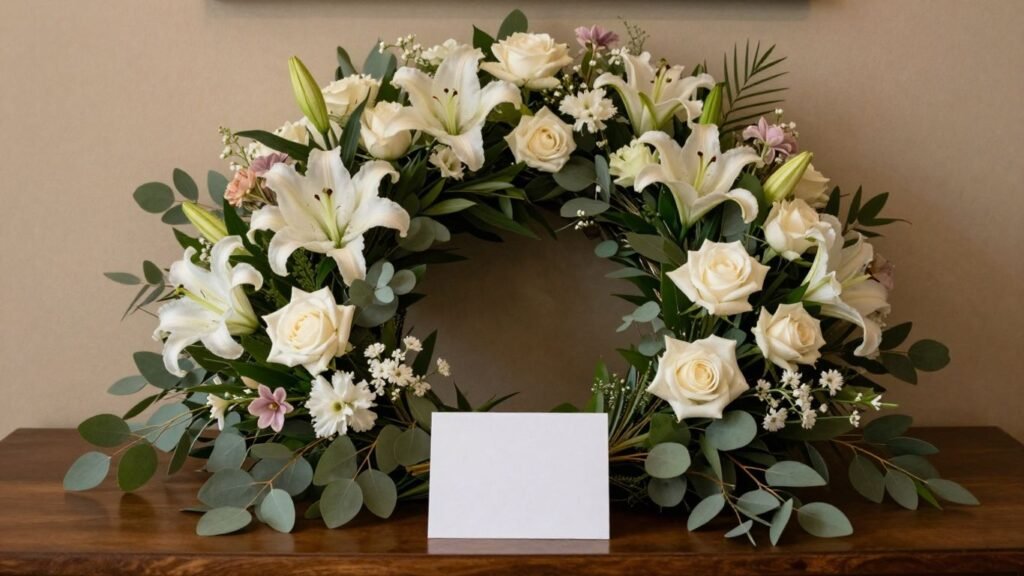
A funeral wreath is a circular floral tribute often chosen for its graceful, continuous shape. It can be displayed at a funeral service, placed beside a coffin, or presented at a graveside ceremony. For anyone arranging a funeral wreath Altona tribute, the most suitable choice usually depends on the service setting and the relationship with the person being remembered.
What a funeral wreath represents
The wreath’s circular form is commonly associated with continuity, remembrance, and enduring affection. Its flowers can also communicate a quieter, more personal sentiment, particularly when they reflect a favourite colour or bloom. The arrangement does not need to be elaborate to feel meaningful; a carefully chosen combination can say a great deal.
Many people select a wreath because it offers a visible focal point during a service. It can stand near other floral tributes without taking attention away from the family or the ceremony. Personal meaning matters most when deciding which flowers belong in it.
How wreaths differ from other funeral flowers
A wreath is generally designed as one complete, structured tribute, while a bouquet may be easier to carry or send to a family home. Standing sprays are displayed upright and can make a stronger visual statement, whereas a flat wreath can be laid on a coffin, table, or graveside surface. Each format has a different presence.
The right choice can also depend on the funeral director’s arrangements. Some services have limited room around the coffin or lectern, so it is sensible to ask where flowers will be placed before ordering. A florist can often suggest a shape that works well in the available space.
When to send or display a wreath
A wreath may be delivered to a funeral home, church, crematorium, cemetery, or family residence. If it is intended for the service, the delivery should arrive with enough time for staff to position it safely and respectfully. Sending it to the family home may be more appropriate when the ceremony is private or the venue has restrictions on floral displays.
When arranging funeral flowers in Altona, provide the service date and venue as early as possible. This gives the florist time to prepare the design and confirm where the tribute should go. If plans change, notify the florist and funeral director promptly.
Choosing between a standing wreath and a flat arrangement
A standing wreath is supported on an easel and is easy for guests to see in a chapel, viewing room, or reception area. A flat wreath has a lower profile and may suit a coffin, memorial table, or graveside setting. Neither option is automatically more appropriate; the ceremony’s layout should guide the decision.
Ask whether the venue supplies stands and whether the arrangement will be moved after the service. These small practical details can prevent an awkward delivery and help ensure the wreath appears as intended.
Choosing flowers and colours for the tribute
Flowers set the emotional tone of a wreath, but there is no single correct palette for a funeral. Whites and creams can feel calm and traditional, while soft pastels may create a gentle, intimate tribute. Brighter shades can also be suitable when they recall the person’s character or favourite garden.
Traditional flowers for funeral wreaths
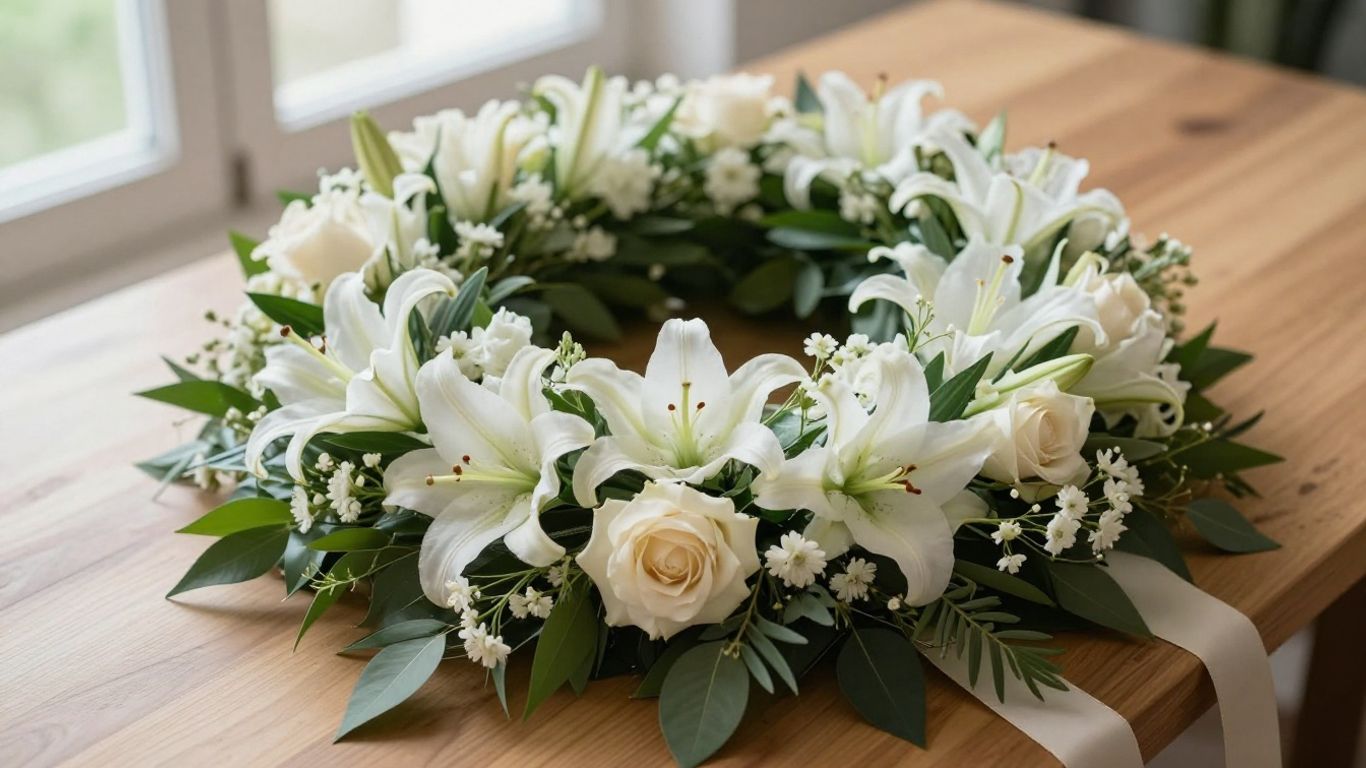
Roses, lilies, carnations, chrysanthemums, and native flowers are all commonly considered for sympathy arrangements. Roses may suggest love or respect, lilies can create a serene appearance, and carnations are valued for their fullness and staying power. Native blooms can add a distinctly Australian character to the tribute.
The most suitable flowers are often those that connect to a memory. A modest selection of familiar blooms may feel more sincere than a grand design chosen only because it is traditional. If a particular flower is unavailable, a florist can usually recommend a similar shape or colour.
The meaning of common flower colours
Colour meanings vary between families and cultures, so they should be treated as gentle guidance rather than strict rules. White often conveys peace and reverence, pink can suggest tenderness, and purple may feel reflective or dignified. Yellow and orange can be fitting when the person was known for warmth, energy, or a love of bright gardens.
A mixed palette can be especially useful when several family members are contributing. It allows the wreath to feel personal without relying on one symbolic interpretation. Soft pastel designs, such as these pastel sympathy flowers, can suit a quiet and peaceful remembrance.
Seasonal flowers and local availability
Seasonal flowers are often fresher, more readily available, and better suited to local growing conditions. They can also make the arrangement feel connected to the time of year. A florist may suggest alternatives if a requested flower is out of season or difficult to source at short notice.
Availability can change quickly around public holidays, periods of extreme weather, or busy funeral dates. Rather than focusing on one exact flower, describe the colour, texture, and feeling you want. That gives the florist room to create a balanced wreath with what is fresh.
Balancing personal preferences with funeral customs
Personal wishes should sit comfortably alongside the family’s customs and the expectations of the service. A favourite colour may be included subtly through ribbon or accent flowers, while a more traditional base keeps the overall design respectful. It is also wise to check whether the family has requested donations instead of flowers.
When customs are unfamiliar, asking the funeral director or a close family member is considerate. A sensitive arrangement does not have to be generic; it simply needs to fit the setting and avoid placing pressure on grieving relatives.
Selecting the right funeral wreath design
The design should reflect both the person being remembered and the role of the sender. A close relative may choose a larger, highly personal tribute, while a colleague or neighbour may prefer something restrained. Shape, scale, colour, and wording can all be adjusted without losing the quiet dignity of a wreath.
Matching the wreath to the relationship
Family members often choose flowers connected to shared memories, such as a beloved garden bloom or a familiar colour. Friends may select something warm and expressive, while colleagues often choose a classic design with a brief message from the team. The relationship should guide the level of personal detail.
If several people are contributing, agree on one arrangement and one message where possible. This can look more cohesive than sending multiple tributes with overlapping wording. A florist can help balance different preferences within a single wreath.
Personalising the shape, size, and style
A small wreath can be ideal for a private family gathering or a contribution from one person. A larger standing design may suit a public service where it needs to be visible among other tributes. Oval, heart-shaped, and traditional circular forms each create a different impression.
Consider the location as well as the budget. A broad design may need more floor space, while a compact wreath can be easier to place near a memorial table. Personalisation works best when it supports the ceremony rather than competing with it.
Adding ribbons, messages, and floral details
A ribbon can identify the sender and carry a short phrase such as “Forever remembered” or “With deepest sympathy.” Longer thoughts are usually better suited to a separate card, where they can be read privately. Keep the ribbon wording clear enough to be seen from a respectful distance.
Small details can include a favourite flower, a natural foliage border, or a colour associated with the person. These touches are most effective when there are only one or two of them. Too many additions may make the arrangement look crowded.
Choosing between understated and elaborate designs
An understated wreath may use one flower type, a restrained palette, and simple foliage. An elaborate design may combine several textures, a fuller shape, and a more prominent ribbon. Both can be appropriate, depending on the ceremony and the personality being honoured.
When uncertain, choose a design that feels calm and carefully composed. A wreath does not need to be large to be noticed, and a simple arrangement can carry considerable emotional weight.
Ordering a funeral wreath in Altona
Ordering flowers during bereavement can feel like an extra responsibility, so clear information makes the process easier. Start with the service details, then choose the arrangement and message. Local delivery options may include funeral homes, churches, crematoria, cemeteries, and private residences, subject to their delivery policies.
Finding a local florist or delivery service
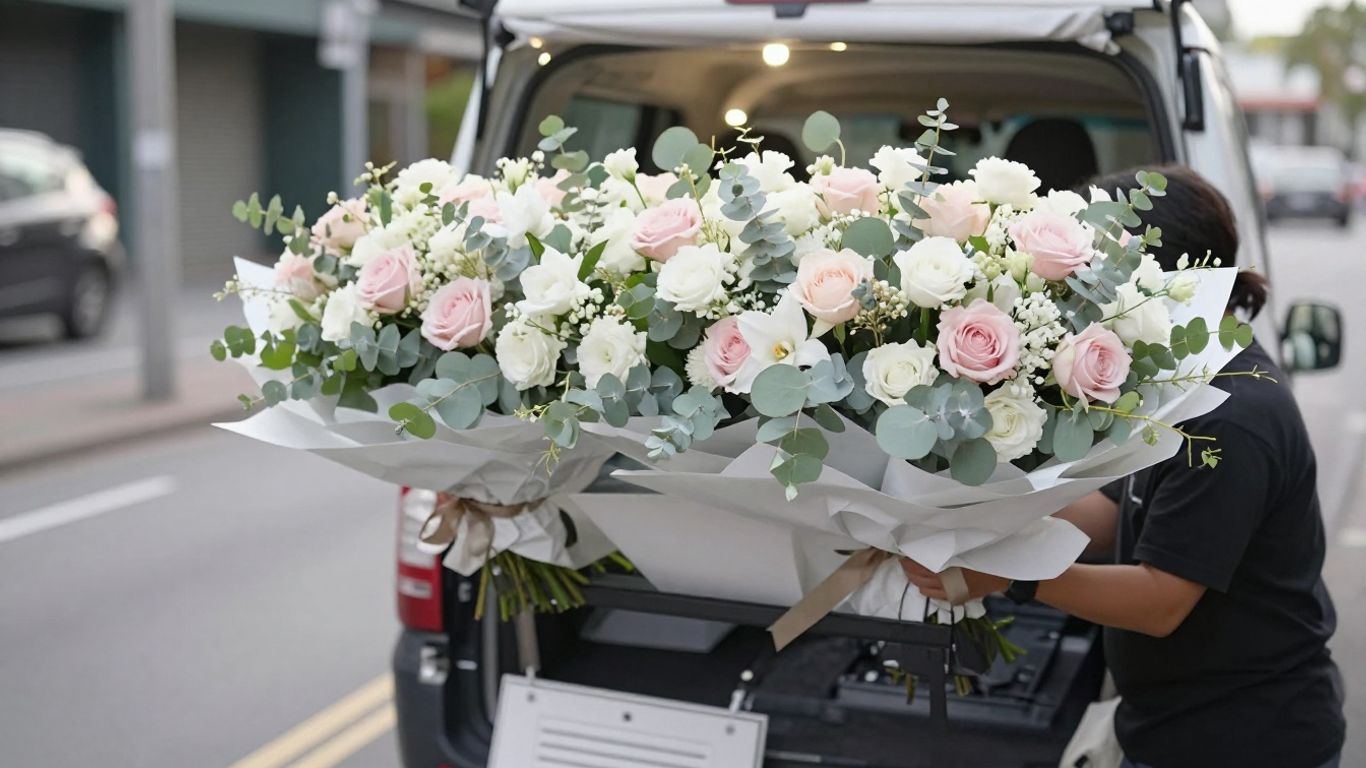
Look for a florist that regularly handles sympathy orders and can explain delivery procedures without rushing the conversation. Ask whether the wreath can be delivered to the service venue and whether the florist will confirm the timing with the funeral director. Clear communication matters as much as the floral design.
You may order online or by phone, depending on the service. A phone conversation can be useful when the design needs to be adapted, while an online order may be convenient when the requirements are straightforward. Either way, request written confirmation of the details.
Providing accurate funeral and cemetery details
Give the full name of the deceased, the service date and time, the venue, and the recipient or funeral director’s name. For cemetery deliveries, include the section or other identifying information if available. Avoid relying on a familiar venue name alone, especially where several facilities share similar names.
A concise order note should include:
- The deceased person’s full name.
- The exact venue and delivery address.
- The service date and required arrival time.
- The sender’s name and contact number.
These details reduce the chance of a delivery being delayed or left with the wrong person. Read them back before payment, particularly if the order is being placed under stress.
Checking delivery times and availability
Ask how much notice is needed for the chosen size and flower combination. Same-day requests may be possible, but availability depends on the design, season, delivery route, and time the order is received. A florist may recommend a suitable alternative if the original selection cannot be prepared safely.
Do not assume that delivery to a residence follows the same process as delivery to a funeral venue. The receiving arrangements can differ, and some locations have specific access hours. Confirm these details before finalising the order.
Confirming the order before the service
A final confirmation should cover the design, card or ribbon wording, price, delivery address, and arrival time. Keep the order reference and the florist’s contact details until after the service. If the funeral schedule changes, pass the update on immediately.
A brief confirmation call can provide reassurance when timing is especially important. It also gives you a chance to correct a spelling mistake or clarify whether the wreath is intended for the ceremony, graveside, or family home.
Planning a respectful budget
Funeral flowers can be chosen at many price points, and a meaningful tribute does not depend on spending the most. The final cost is shaped by the arrangement’s size, flower varieties, foliage, structure, delivery distance, and any personalised elements. Ask for a clear quote before approving the order.
Typical factors that affect wreath pricing
Flower cost is only one part of the total. A larger base requires more stems and materials, while intricate shapes can involve additional preparation. Premium or difficult-to-source blooms may also affect the quote, especially when the order is urgent.
Delivery timing and distance can influence the price as well. Some services may charge more for a narrow delivery window or a remote venue. Knowing these factors early makes it easier to adjust the design without losing its character.
Comparing size, flower type, and design options
When comparing options, look at the overall shape and fullness rather than counting individual stems. A smaller wreath with strong colour balance can appear more considered than a larger arrangement with too many competing elements. Ask what substitutions may be made if particular flowers are unavailable.
| Choice | Usually affects | Practical question |
|---|---|---|
| Size | Stem count and materials | Where will the wreath be displayed? |
| Flower type | Seasonal and sourcing cost | Is a similar bloom acceptable? |
| Shape | Construction time and support | Will it be flat or freestanding? |
| Ribbon or custom detail | Materials and preparation | What wording is needed? |
This comparison helps separate the features that matter most from those that are simply decorative. You might prioritise a favourite flower, for example, while choosing a smaller size to stay within budget.
Accounting for delivery and customisation costs
Ask whether delivery, stands, ribbons, cards, and taxes are included in the quoted price. Custom wording may be simple, while a special shape or highly specific flower request may require additional preparation. A transparent quote should make these differences easy to understand.
If several people are contributing, decide who will approve the final design and receive the confirmation. That prevents duplicated orders and makes the budget conversation gentler for everyone involved.
Choosing a meaningful arrangement at any budget
Start by identifying the one feature that carries the most meaning: perhaps a colour, a flower, or a ribbon message. Build the design around that feature, then let the florist suggest economical foliage or seasonal alternatives. This approach often creates a personal result without unnecessary extras.
A smaller, thoughtfully composed wreath can be just as appropriate as a larger one. The care behind the choice, and the respect shown in its delivery, are what make the tribute matter.
Ensuring timely delivery and presentation
A beautiful wreath is most helpful when it arrives at the right place and time. Funeral schedules can be tightly managed, and venues may have limited access for deliveries. Share the complete plan with both the florist and the person coordinating the service.
Coordinating delivery with the funeral schedule
Confirm whether the wreath should arrive before guests, before the coffin enters the venue, or at a particular time arranged by the funeral director. A delivery window is usually safer than assuming the florist can arrive at the exact minute of the service. Include time for staff to inspect and position the flowers.
If the venue has separate entrances for suppliers, provide those instructions in advance. Small access details can make a considerable difference on a busy day.
Preparing for same-day or urgent orders
For an urgent order, call rather than relying only on an online form. Explain the deadline, the venue, and the minimum design you would accept. Being open to seasonal substitutions gives the florist more ways to prepare a fresh arrangement quickly.
Urgent delivery should not mean vague delivery. Confirm the recipient, the address, the expected arrival window, and the best phone number for questions. These checks are especially useful when the service is taking place outside normal business hours.
Confirming the recipient and delivery location
The recipient may be a funeral director, venue coordinator, cemetery office, or family member. Use the recipient’s full name and role where possible, then confirm whether someone will be available to receive the wreath. For a residence, add any access instructions that are relevant and respectful.
A cemetery may have several entrances or sections, so precise information is valuable. If you are unsure, ask the funeral director for the preferred delivery point rather than guessing.
Checking how the wreath will be presented at the service
Ask whether the venue will provide an easel, table, or other support. Find out whether flowers will remain at the venue, travel to the graveside, or be collected afterward. This can affect the best size and construction of the arrangement.
Presentation should feel natural within the service. A wreath that is stable, clearly addressed, and placed where guests can see it will offer a quiet visual expression of support without creating extra work for the family.
Writing a meaningful funeral wreath message
A short message often accompanies the wreath, either on a card or ribbon. It should sound like something you would genuinely say to the family, while remaining appropriate for a public ceremony. A few sincere words are usually more moving than a long, carefully polished paragraph.
Keeping the card message personal and respectful
Begin with a simple expression of sympathy, then add a sentence that acknowledges the person or the relationship. You might mention a treasured quality, a shared memory, or the comfort you hope the family receives. Avoid trying to explain the loss or offer certainty about grief.
If the card is from a group, name the group clearly and keep the tone consistent. A personal message can still be brief: “Remembering her warmth and kindness. Thinking of you all during this difficult time.”
Examples for family members, friends, and colleagues
Family members may write, “You will always be loved and remembered,” or refer to a shared family memory. A friend might choose, “Grateful for every conversation and every laugh. You will be missed.” Colleagues can write, “With sincere sympathy from everyone at the office.”
The wording should reflect the sender’s real connection. If the relationship was formal, a respectful and simple message is preferable to language that sounds more intimate than it truly was.
Choosing an appropriate sign-off
Common sign-offs include “With love,” “With deepest sympathy,” “In loving memory,” and “Thinking of you.” The best choice depends on whether the sender is a close relative, friend, neighbour, or professional group.
Add names so the family knows who sent the wreath. For a group, include the organisation or team name and, if space allows, the names of individual contributors.
Avoiding wording that may feel too formal or impersonal
Avoid clichés that could sound detached, such as phrases that minimise the loss or suggest that grief should quickly pass. Religious wording should be used only when it suits the family’s beliefs and the context of the service. Humour is also best avoided unless you know the family would welcome it.
Read the message aloud before sending it. If it sounds like a generic template rather than your own voice, simplify it. A warm sentence with a real point of connection will usually feel most sincere.
Conclusion
Choosing a funeral wreath in Altona is a quiet way to show care, respect, and remembrance. By considering the service setting, personal meaning, budget, delivery details, and message together, you can create a tribute that feels thoughtful without becoming overwhelming.
Frequently Asked Questions
What is the difference between a funeral wreath and a sympathy bouquet?
A funeral wreath is a structured arrangement, often circular and designed for display at a service or graveside. A sympathy bouquet is generally looser and may be sent to a family home or given directly to relatives.
What flowers are suitable for a funeral wreath?
Roses, lilies, carnations, chrysanthemums, seasonal blooms, and native flowers can all be suitable. The best choice depends on the family’s preferences, the person’s personality, the season, and the tone of the service.
What colours are appropriate for funeral flowers?
White, cream, soft pink, purple, and pastel shades are commonly chosen for their calm appearance. Brighter colours may also be appropriate when they reflect the person being remembered or the family’s wishes.
Can a funeral wreath be delivered directly to a cemetery?
It may be possible, but the florist needs the exact cemetery details, delivery point, service time, and recipient information. It is sensible to confirm the arrangements with the funeral director or cemetery office first.
How much does a funeral wreath usually cost?
Pricing varies according to size, flower type, design complexity, delivery requirements, and personalisation. Requesting a quote with each cost explained makes it easier to select an arrangement within your budget.
How early should a funeral wreath be ordered?
Ordering as early as possible gives the florist more flexibility with flowers, design, and delivery timing. Same-day orders may be possible, but they depend on local availability and the urgency of the request.
What should be written on a funeral wreath card?
Keep the message brief, sincere, and appropriate to the relationship. Express sympathy, mention the person warmly if suitable, and sign with the sender’s name or group so the family knows who sent the tribute.