Key Takeaways
A sympathy bouquet can offer quiet support when words feel difficult to find. The most thoughtful choice considers the family, the setting, the timing, and the personality of the person being remembered.
- Match the arrangement to a home, funeral service, or memorial setting.
- Choose flowers and colors that feel respectful and personally meaningful.
- Confirm the recipient, address, venue, and preferred delivery time.
- Check flower substitutions, seasonal availability, and delivery fees before ordering.
- Keep the card message simple, sincere, and focused on support.
Understanding the role of a sympathy bouquet
A sympathy bouquet is a gentle way to acknowledge someone’s loss and let a grieving family know they are in your thoughts. It does not need to be elaborate to be meaningful. When choosing a sympathy bouquet Altona families will receive at home or at a service, consider both the relationship and the setting. A considerate gesture often matters more than the size of the arrangement.
How flowers express condolences
Flowers bring a visible expression of care to a difficult moment. Their natural beauty can soften a room, provide a quiet point of attention, and remind the recipient that others are thinking of them. A bouquet also communicates presence when a phone call or visit may feel difficult to arrange.
The message does not have to be grand. A modest arrangement chosen with care can be just as comforting as a larger display, especially when it reflects the recipient’s taste or the memory of the person who died.
The difference between sympathy and funeral arrangements
Sympathy flowers are generally sent to grieving relatives or friends as a personal gesture of support. Funeral arrangements are more often designed for a viewing, funeral, memorial, or graveside service, where their size and shape need to suit the venue. The terms can overlap, but the intended recipient and destination usually guide the decision.
For broader guidance on choosing an arrangement respectfully, this condolence flowers guide can help clarify the differences between flowers for a home and flowers for a service.
When to send a bouquet
Flowers may be sent soon after hearing the news, before a funeral, or in the weeks that follow. There is no single correct moment. An arrangement delivered after visitors have gone can be especially thoughtful because grief often continues after the formal gatherings have ended.
If you are sending flowers to a service, allow time for the florist and venue to coordinate delivery. If you are sending them to a home, a scheduled delivery can help avoid arriving during a private family moment.
Choosing a message that feels sincere
A short card is usually enough. Name the person who died if appropriate, acknowledge the loss, and offer support without trying to explain or solve the grief. Personal memories can make a message warmer, but only if they feel natural and genuinely yours.
Avoid phrases that promise the family will soon feel better. Simple words such as “Thinking of you and your family” or “With heartfelt sympathy” are often more comfortable and sincere.
Selecting the right flowers and colors
Flower choice is personal, and there is no universal arrangement that suits every family. White and neutral flowers are often selected for their calm appearance, while softer pastels can bring warmth without feeling bright or celebratory. The person’s preferences, cultural background, and relationship to you should guide the final choice.
Traditional flowers for expressing sympathy
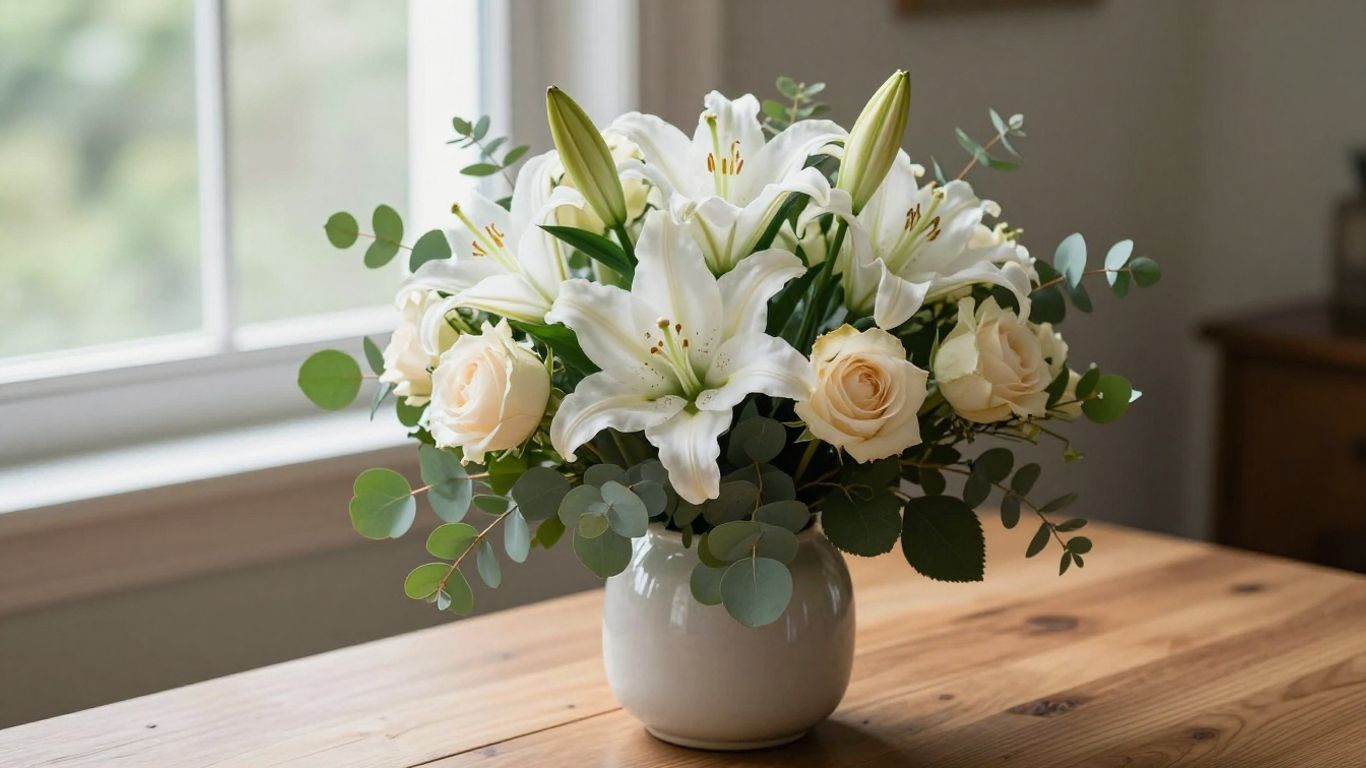
Lilies, roses, chrysanthemums, carnations, and orchids are commonly associated with remembrance and sympathy. Their meaning can vary by culture and family tradition, so familiarity is useful but should not become a rigid rule. Seasonal flowers and Australian natives may also be fitting when they reflect the person’s garden, home, or personality.
A trusted local florist can help balance traditional flowers with what is available and appropriate for the occasion. The goal is a graceful arrangement, not a forced symbolic message.
What different flower colors can convey
White often feels peaceful and understated, while cream and pale green can create a natural, restful palette. Pink may add tenderness, lavender can feel reflective, and deeper colors may suit someone whose style was expressive or distinctive. Color is best understood as part of the overall impression rather than a fixed vocabulary.
The most useful question is whether the palette feels suitable for the recipient and setting. A color that recalls the person’s home or favorite flowers may carry more meaning than a conventional choice.
When to choose soft, neutral, or vibrant tones
Soft and neutral tones are a safe choice when you do not know the family’s preferences or when the flowers are going to a formal service. Brighter colors may be appropriate when they reflect the character of the person being remembered, particularly for a celebration of life. Cultural and religious customs should always take priority over general color suggestions.
Think about the atmosphere the flowers will enter. A compact pastel bouquet may feel right in a quiet home, while a more vivid tribute may be suitable for a large memorial gathering.
Personalizing the bouquet to reflect the recipient
Personalization can be subtle. Consider favorite flowers, gardening interests, a preferred color, or the texture of native foliage. You can also choose a shape that suits the recipient’s home, rather than selecting an arrangement only because it looks impressive online.
A personal detail in the card often makes the gesture feel complete. One brief memory or a sentence about what the person meant to you can say more than a long, formal message.
Choosing an arrangement for the occasion
The destination should influence the arrangement as much as the flowers themselves. A bouquet for a family home needs to be easy to place and care for, while a service arrangement may need to be visible from a distance or positioned according to the venue’s instructions. If you are unsure, describe the setting clearly when ordering.
Bouquets for delivery to a home
A hand-tied bouquet or vase arrangement is usually suitable for a home. Consider the available space, the recipient’s ability to lift or arrange flowers, and whether they will be receiving visitors. A design that arrives ready to display can remove one small practical task during a demanding time.
Keep the scale considerate. A medium arrangement can offer warmth without taking over a table, kitchen bench, or living room.
Arrangements suitable for a funeral service
Service flowers should suit the room, the ceremony, and the instructions of the funeral home or venue. Larger arrangements may be appropriate when they need to be seen from the back of a room, while a smaller tribute may be better for an intimate gathering. Confirm whether the family has requested particular flowers or asked for donations instead.
If the flowers are intended for a funeral in Altona, this funeral flower selection guide offers another way to think through the service, timing, and personal details.
Wreaths, sprays, and standing tributes
Wreaths can convey remembrance through a circular form, while sprays and standing tributes are often chosen for larger services. These designs generally need more space and careful placement than a home bouquet. They may also require coordination with the funeral home or ceremony venue.
Ask where the arrangement will be placed and whether the florist will collect stands or containers afterward. Practical details are part of choosing an appropriate tribute.
Compact options for apartments or smaller spaces
A petite vase arrangement, posy, or low basket can be a thoughtful choice for an apartment or shared household. Compact flowers are easier to place away from walkways and may be less demanding to maintain. They can still include meaningful colors, seasonal flowers, or a favorite bloom.
The best small arrangement feels intentional rather than reduced. A clear shape and a restrained palette often give a compact design a calm, finished appearance.
Arranging sympathy bouquet delivery in Altona
Delivery details deserve as much care as flower selection. Confirm whether the flowers are going to a private home, workplace, funeral home, church, cemetery, or memorial venue. A local delivery plan should account for access, timing, recipient availability, and any instructions from the family or venue.
Same-day and scheduled delivery options
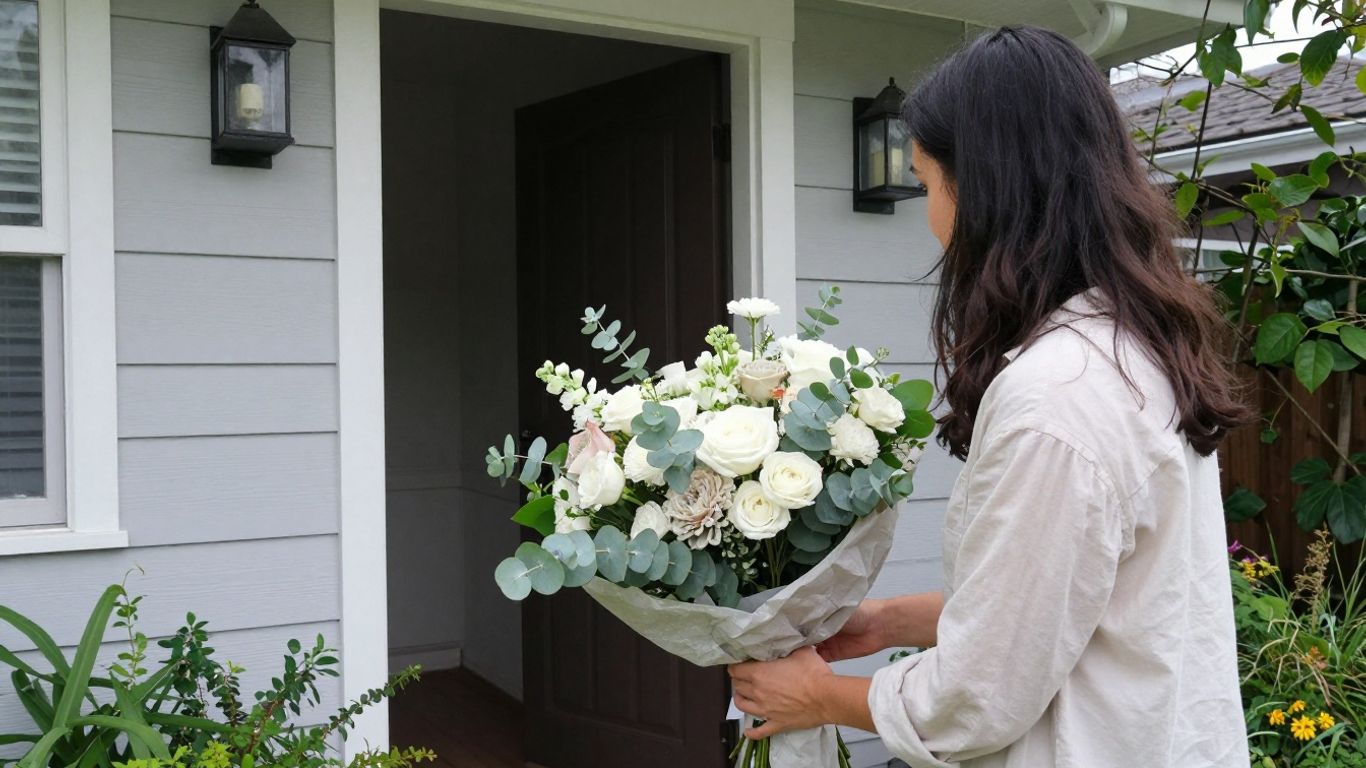
Same-day delivery can be useful when you have only just heard the news, but availability depends on ordering time, flower stock, and the destination. Scheduled delivery is often preferable when the bouquet needs to arrive before a gathering or on a particular date. Ask about the order cutoff rather than assuming every arrangement can travel immediately.
Give the florist enough information to recommend a realistic option. A little notice may also allow more specific flowers or colors to be sourced.
Confirming the correct delivery address
Double-check the street address, unit number, suburb, postcode, and recipient’s full name. For a home delivery, include a phone number if the recipient is comfortable being contacted. For a service, use the exact venue name and include the date and time of the ceremony.
Before submitting an order, it helps to confirm:
- The recipient’s name and phone number.
- The complete delivery address and access instructions.
- The preferred delivery date and time window.
- Any venue, funeral home, or family restrictions.
These details reduce the chance of a missed delivery or an arrangement arriving at the wrong location. They also give the florist a clearer picture of how to handle the order.
Timing delivery around a funeral or memorial
Flowers for a service should arrive with enough time for staff to receive and position them. Delivery too early may create storage problems, while delivery too late can leave the tribute outside the ceremony. Ask the venue or funeral home which delivery window they prefer.
For flowers sent to the family home, timing can be more flexible. A delivery during ordinary daytime hours is often easiest, but the recipient may have travel or visitation plans to consider.
Coordinating delivery with a funeral home
A funeral home may have specific receiving hours, loading instructions, or limits on where flowers can be placed. Provide the name of the deceased, the service date, and the relevant contact person when ordering. If the family has chosen a particular funeral home, verify the details with them where possible.
For arrangements intended for a formal tribute, this funeral delivery advice provides useful prompts about venue coordination, arrangement types, and timing.
Setting a budget and comparing local florists
A respectful gesture does not depend on spending a particular amount. Prices vary according to flower type, season, arrangement size, container, design time, and delivery distance. Setting a comfortable budget first can make the ordering conversation clearer and less stressful.
Typical factors that affect bouquet pricing
Flower availability is one of the biggest variables. Imported or out-of-season flowers may cost more, while seasonal blooms and locally available foliage can offer good value. Larger arrangements also require more stems, mechanics, packaging, and time to construct.
Ask what is included in the displayed price. A vase, card, delivery, service fee, or special requested flower may be charged separately.
What to check before placing an order
Read the arrangement description carefully and note whether the image is an exact design or an example of the general style. Check the florist’s delivery area, ordering deadline, cancellation terms, and approach to substitutions. It is reasonable to ask how the florist handles a request when a particular flower is unavailable.
A simple comparison table can help separate the headline price from the practical details:
| Detail | Why it matters | What to confirm |
|---|---|---|
| Arrangement size | Indicates scale for the destination | Approximate height and width |
| Flower selection | Affects meaning and seasonal availability | Possible substitutions |
| Container | Determines how quickly flowers can be displayed | Vase, basket, or wrap included |
| Delivery | May vary by suburb and timing | Fee, window, and venue access |
After checking these points, compare the overall service rather than choosing only by the lowest listed price. A clear description and responsive communication can be especially valuable when the order is time-sensitive.
Comparing flower freshness and arrangement quality
Look for descriptions that explain flower condition, care, and design style without making unrealistic promises. Fresh flowers should be handled carefully, conditioned appropriately, and arranged so the bouquet has a balanced shape. Photos can help, but they should be treated as a guide because seasonal flowers naturally vary.
You can also ask whether the arrangement will be made close to delivery and whether care instructions will be included. Good presentation matters, but thoughtful construction and practical longevity matter too.
Understanding delivery fees and service areas
Delivery charges may depend on the suburb, distance, urgency, and destination type. A funeral home or venue may involve different handling requirements from a private residence. Confirm the total before payment, including any same-day or timed-delivery surcharge.
If the address is near the edge of the service area, ask whether a different delivery window applies. Clear expectations are kinder to everyone involved.
Ordering a sympathy bouquet with confidence
Once the setting, flowers, and budget are clear, ordering should be straightforward. You do not need to know every flower name or design term. A florist can usually work from a few useful details: who the flowers are for, where they are going, when they must arrive, and the feeling you hope the arrangement will convey.
Information to provide when ordering
Give the florist the recipient’s name, delivery address, phone number, date, and any access instructions. If the flowers are for a service, include the deceased’s name, venue, service time, and the name of the funeral home or ceremony coordinator. Mention preferred colors, flowers, budget, and any cultural or religious considerations.
The more precise the practical information, the more attention can remain on the design itself. If you are uncertain about one detail, ask before payment rather than leaving the florist to guess.
Writing a respectful card message
A card message can be only a sentence or two. Express sympathy, offer gentle support, and sign your name clearly. If you knew the deceased, a brief personal memory may help the family feel that the person is being remembered as an individual rather than only as a name.
Avoid advice about how to grieve or language that minimizes the loss. Simple words carry weight when they are honest and directed toward the people receiving them.
Checking substitutions and seasonal availability
Flowers change with the season, and a requested variety may not be available on the chosen date. Ask whether substitutions will keep the same color, style, and approximate value. If a specific flower has personal meaning, say so before the florist finalizes the design.
A thoughtful substitution is usually better than delaying an important gesture. The key is clear communication about what may change and what should remain consistent.
What to do if the recipient is unavailable
Provide a safe alternative where appropriate, such as a concierge, reception desk, neighbor, or funeral home contact. For private homes, ask whether the florist will leave the flowers in a sheltered place, attempt redelivery, or contact the recipient. A phone number can make this decision easier, but it should be shared respectfully.
If delivery cannot be completed, contact the florist promptly. They can explain the available options and help protect the flowers until a new arrangement is made.
Conclusion
Choosing sympathy flowers is a quiet act of care. When you match the arrangement to the setting, personalize it thoughtfully, and confirm the delivery details, the gesture can offer comfort without demanding anything from the grieving family. A sincere message and a carefully chosen bouquet are often enough.
Frequently Asked Questions
What flowers are appropriate for a sympathy bouquet?
Lilies, roses, chrysanthemums, carnations, orchids, seasonal flowers, and Australian natives can all be appropriate. The best choice depends on the recipient, the setting, cultural preferences, and the personality of the person being remembered.
Should sympathy flowers be sent to the home or funeral service?
Send them to the home when the main purpose is to support the family directly. Send them to a funeral service when the flowers are intended as a shared tribute, but confirm the venue’s receiving instructions first.
Are white flowers the only suitable choice?
No. White and neutral flowers are calm and traditional, but pastels or more vivid colors may be suitable when they reflect the person’s preferences or the tone of a celebration of life.
Can I send sympathy flowers after the funeral?
Yes. Flowers sent after the funeral can remind the family that support continues beyond the formal ceremony. A later delivery may be especially meaningful once visitors and immediate arrangements have subsided.
What should I write in a sympathy card?
Keep the message simple and sincere. Acknowledge the loss, offer your sympathy, and let the recipient know you are thinking of them. Add a short personal memory if it feels natural.
How far in advance should funeral flowers be ordered?
Order as early as possible, especially for a large tribute, a specific flower, or a timed delivery. Same-day options may be available, but they depend on stock, location, and the florist’s cutoff time.
What if I do not know the family’s flower preferences?
Choose a restrained arrangement in soft or neutral tones, or ask someone close to the family for guidance. You can also explain your uncertainty to the florist and request a respectful design within your budget.